Zesty Pickled Lemon Delights
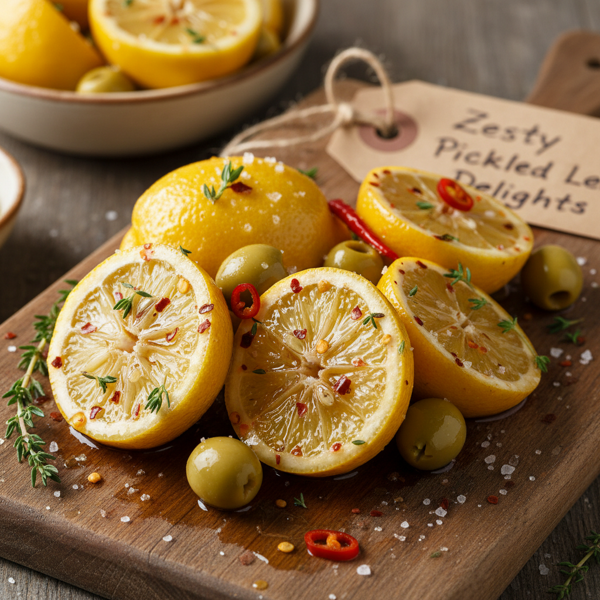
Transform your leftover lemons into these enchanting Zesty Pickled Lemon Delights! Bursting with vibrant flavors, these sweet, sour, and salty lemon slices are perfect for elevating your culinary creations. Use them as a unique garnish for margaritas or toss them into salads, sauces, or charcuterie boards for added zing. The rinds are completely edible, adding a delightful texture to any dish. This simple refrigerator pickling method allows you to enjoy bright, tangy lemon flavors at home with minimal effort. Ideal for preserving citrus, these delightful slices will keep for weeks, bringing a taste of sunshine to any occasion.
24
Servings
60
Calories
5
Ingredients
Ingredients
Lemons
8 (sliced into circles)
Lemon Juice
32 ounces (freshly squeezed)
Kosher Salt
1 cup (coarse)
Sugar
1 cup (granulated)
Pickling Spices
2 tablespoons (optional, choose your favorites)
Instructions
1
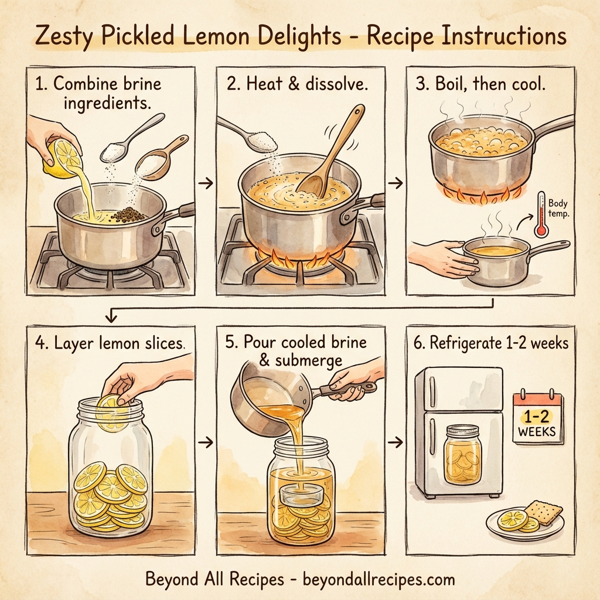
In a medium-sized saucepan, combine the lemon juice, kosher salt, sugar, and pickling spices (if using).
2
Heat the mixture over medium-high heat, stirring occasionally until the sugar and salt have fully dissolved.
3
Bring the mixture to a boil, then reduce the heat and let it cool until it reaches body temperature.
4
In a large, clean glass jar or tupperware container, carefully layer the lemon slices.
5
Pour the cooled brine over the lemon slices, ensuring they are completely submerged. Use a weight or a plate to hold them down if necessary.
6
Seal the container and place it in the refrigerator for at least one week, allowing the flavors to meld and intensify. For best results, let them pickle for two weeks.
Nutrition Information
16g
Carbs
12g
Sugar
400mg
Sodium
Frequently Asked Questions
Frequently Asked Questions
What are Zesty Pickled Lemon Delights?
They are sweet, sour, and salty lemon slices preserved in a vibrant brine, perfect for garnishing or adding zing to various dishes.
How long do the lemons need to pickle?
For the best results, allow the lemons to pickle in the refrigerator for at least one week, though two weeks is recommended for intensified flavor.
Are the lemon rinds edible?
Yes, the rinds are completely edible and provide a delightful texture to any dish they are added to.
How should I store these pickled lemons?
Store them in a clean, sealed glass jar or Tupperware container inside the refrigerator.
Can I use bottled lemon juice instead of fresh?
The recipe calls for 32 ounces of freshly squeezed lemon juice for the best and most vibrant flavor.
What can I do with the leftover brine?
The tangy brine can be used in salad dressings, marinades, or even as a splash in cocktails.
Are these lemons sweet or salty?
These lemons feature a balanced flavor profile that is sweet, sour, and salty all at once.
Do I need to peel the lemons before slicing?
No, the lemons should be sliced into circles with the peel intact as the rinds become tender and edible during pickling.
How many lemons do I need?
The recipe requires approximately 8 lemons sliced into circles.
What type of salt is best for this recipe?
Kosher salt is recommended for this recipe, specifically 1 cup of coarse kosher salt.
Are the pickling spices mandatory?
No, the 2 tablespoons of pickling spices are optional, allowing you to choose your favorite flavors.
How much sugar is in this recipe?
The recipe uses 1 cup of granulated sugar to balance the salt and acidity.
What are the nutritional facts per serving?
Each serving contains approximately 60 calories, 16g of carbohydrates, 12g of sugar, and 400mg of sodium.
How many servings does this recipe yield?
This recipe makes approximately 24 servings.
Why do I need to boil the brine?
Boiling the mixture ensures that the sugar and salt are fully dissolved before the brine is cooled and poured over the lemons.
Can I eat the lemons immediately after making them?
While you can eat them, they require at least a week of refrigeration for the flavors to meld and the rinds to soften.
What should I do if the lemon slices float?
You can use a weight or a small plate to hold the slices down to ensure they remain completely submerged in the brine.
Can I use this method for other citrus fruits?
Yes, this refrigerator pickling method can be adapted for other citrus like limes or oranges.
Is this a shelf-stable canning recipe?
No, this is a refrigerator pickling method; the lemons must be kept chilled and are not meant for room-temperature storage.
How long will these pickled lemons keep?
When stored properly in the refrigerator, these pickled lemon delights will keep for several weeks.
Can I use table salt instead of kosher salt?
It is best to use kosher salt; table salt is much finer and may make the lemons overly salty if measured by volume.
Do I need to sterilize the jar?
While not strictly necessary for refrigerator pickles, using a very clean glass jar is highly recommended for safety and longevity.
Are these lemons good for cocktails?
Absolutely! They make a unique and flavorful garnish for margaritas and other citrus-based drinks.
Can I add these to salads?
Yes, they are excellent when tossed into salads to provide a bright, tangy zing.
Is there any fat or protein in this recipe?
According to the recipe data, there is no significant fat or protein in these pickled lemons.
What is the preparation for the lemons?
The lemons should be washed and sliced into thin circles.
Can I reduce the amount of sugar?
You can reduce the sugar, but it will result in a much more sour and salty finished product.
What spices should I use if I choose to add them?
Common choices include peppercorns, mustard seeds, coriander seeds, or bay leaves.
Are these similar to traditional Moroccan preserved lemons?
They are similar but use a brine with sugar and juice, making them a sweeter, quicker refrigerator version.
Can I serve these on a charcuterie board?
Yes, they are a fantastic addition to charcuterie boards, pairing well with various cheeses and cured meats.