Zesty Moroccan Preserved Lemons
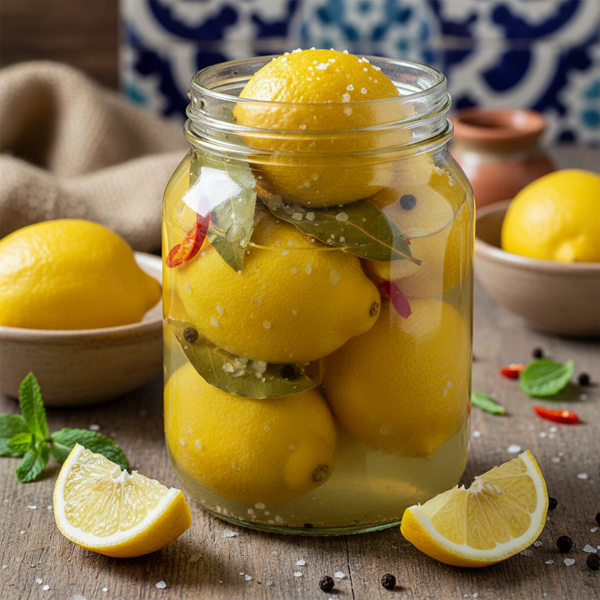
Zesty Moroccan Preserved Lemons are a staple of North African cuisine, known for their bright, tangy flavor and versatile use in various dishes. These vibrant lemons not only infuse your meals with a unique citrusy essence but also add an aromatic depth from the blend of spices traditionally used in Moroccan cooking. Easy to prepare, these preserved lemons can be stored for up to a year, making them a delightful addition to salads, tagines, and marinades. Each bite bursts with flavor, revealing the complexities of a beautiful culinary tradition, and once you have these tangy treats at your disposal, you'll find yourself incorporating them into countless recipes!
N/A
Servings
N/A
Calories
9
Ingredients
Ingredients
Mason jars
2 quarts (Clean and sterilized glass jars recommended)
Unwaxed lemons
8 (Whole and fresh)
Sea salt, fine grain
1/3 cup (For brining)
Unsweetened lemon juice
2 cups (Freshly squeezed preferred)
Cinnamon stick
1 (Whole)
Bay leaf
1 (Whole)
Whole cloves
3-4 (Whole)
Coriander seeds
5 (Whole)
Black peppercorns
4 (Whole)
Instructions
1
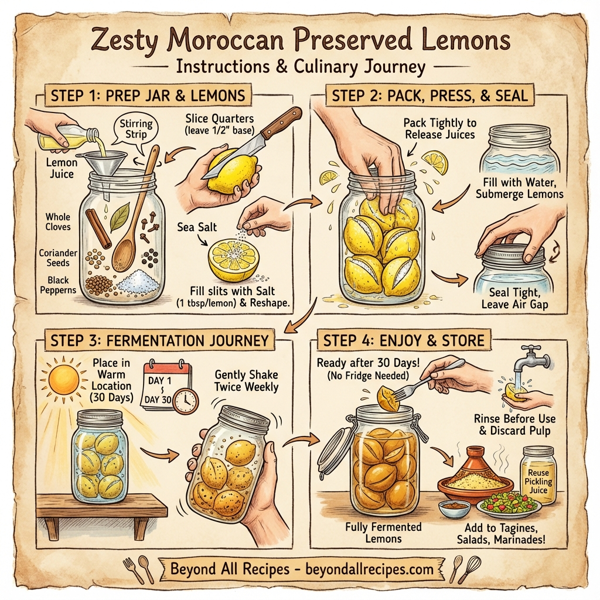
Begin by pouring the unsweetened lemon juice into a large, clean glass jar. Add the spices: cinnamon stick, bay leaf, whole cloves, coriander seeds, and black peppercorns, along with 1 tablespoon of sea salt. Stir gently to combine.
2
Take each unwaxed lemon and slice it into quarters from top to bottom, ensuring you leave about 1/2 inch intact at the bottom. Carefully open each cut and generously fill the slits with sea salt, using approximately 1 tablespoon per lemon. Once filled, reshape the lemons.
3
Pack each lemon tightly into the jar, pressing them down firmly to release their juices and create more space. After adding all the lemons, sprinkle any remaining salt over them.
4
Fill the jar to the top with water, ensuring the lemons are completely submerged. Seal the jar tightly with a lid, leaving a small air gap.
5
Place the jar in a warm location and allow the lemons to ferment for at least 30 days. To ensure even pickling, gently shake the jar a couple of times each week, redistributing the salt and spices.
6
After 30 days, your preserved lemons are ready to use! They do not need refrigeration and can last for up to a year. You can reuse the pickling juice several times; just add more lemon rinds sprinkled with salt as needed.
7
Before using the preserved lemons, rinse them under cold running water and remove and discard the pulp according to your taste preference.
Nutrition Information
Frequently Asked Questions
Frequently Asked Questions
What are Zesty Moroccan Preserved Lemons?
Zesty Moroccan Preserved Lemons are a staple condiment of North African cuisine, known for their bright, tangy flavor and aromatic depth created through salt-fermentation.
How long do preserved lemons take to ferment?
The lemons need to ferment in a warm location for at least 30 days before they are ready to use.
Do preserved lemons need to be refrigerated?
No, these preserved lemons do not need refrigeration and can be stored at room temperature.
How long can I store preserved lemons?
When prepared and sealed correctly, preserved lemons can last for up to a year.
Can I reuse the pickling juice from the jar?
Yes, the pickling juice can be reused several times by adding more salted lemon rinds as needed.
What type of lemons should I use for this recipe?
It is best to use 8 unwaxed lemons that are fresh and whole.
Why should I use unwaxed lemons?
Unwaxed lemons are preferred because the rind is the primary part consumed, and you want to avoid any chemical coatings or waxes used in commercial processing.
What type of salt is recommended for preserving?
Fine grain sea salt is recommended for this recipe, using about 1/3 cup in total.
How do I cut the lemons for preserving?
Slice each lemon into quarters from top to bottom, but leave about 1/2 inch intact at the bottom so the lemon stays together.
What spices are included in Moroccan preserved lemons?
This recipe uses a cinnamon stick, a bay leaf, whole cloves, coriander seeds, and black peppercorns.
Should I rinse the lemons before using them in a recipe?
Yes, you should rinse the preserved lemons under cold running water before use to remove excess salt.
Do I eat the pulp of the preserved lemon?
Usually, the pulp is removed and discarded before use, though this can be adjusted according to your taste preference.
What dishes pair well with preserved lemons?
They are a delightful addition to salads, Moroccan tagines, and various marinades.
Why is it important to pack the lemons tightly in the jar?
Packing them firmly releases their natural juices and ensures there is enough space for all the ingredients while keeping the lemons submerged.
Where should the jar be kept during the fermentation process?
The jar should be placed in a warm location to facilitate the fermentation process.
How often should I shake the jar during fermentation?
You should gently shake the jar a couple of times each week to redistribute the salt and spices.
Do I need to add water to the jar?
Yes, after adding the lemons and juice, fill the jar to the top with water to ensure the lemons are completely submerged.
What is the purpose of the 2 cups of lemon juice?
The unsweetened lemon juice acts as the primary acidic liquid for the brining and preservation process.
How much salt goes into each lemon?
You should generously fill the slits of each quartered lemon with approximately 1 tablespoon of sea salt.
What size of jar is needed for this recipe?
The recipe suggests using two-quart sized clean and sterilized glass Mason jars.
Can I use table salt instead of sea salt?
Sea salt is preferred for pickling and preserving due to its purity and mineral content; table salt often contains additives that may cloud the brine.
Is it necessary to sterilize the jars?
Yes, using clean and sterilized glass jars is highly recommended to prevent any spoilage during the long fermentation period.
What should I do if the lemons are not fully submerged?
You must ensure the lemons are completely submerged in liquid; if necessary, add a little more water or lemon juice to cover them.
What is the first step in the instructions?
The first step is to pour the lemon juice into the jar and mix it with the cinnamon, bay leaf, cloves, coriander, peppercorns, and 1 tablespoon of salt.
Can I add other spices to the mix?
While this recipe uses traditional Moroccan spices, the base method allows for variations, though these specific spices provide the intended aromatic profile.
What do I do with the remaining salt after packing the lemons?
Any salt left over after filling the individual lemons should be sprinkled over the lemons once they are packed in the jar.
Is there an air gap needed in the jar?
Yes, when sealing the jar, you should leave a small air gap at the top.
How many coriander seeds are used?
The recipe calls for exactly 5 whole coriander seeds.
How many whole cloves are required?
You will need 3 to 4 whole cloves for this recipe.
Are preserved lemons healthy?
Yes, they are a healthy way to add intense flavor to dishes and are a traditional method of preserving citrus without artificial additives.