Zesty Horseradish-Glazed Brisket for Passover

Celebrate Passover with this flavorful horseradish-glazed brisket that's sure to impress your family and friends. Richly marbled, the brisket is slow-cooked to tender perfection alongside a medley of luscious vegetables, absorbing all the delicious flavors of the herbs and spices. The horseradish adds a delightful zing, elevating the savory notes of the beef. Perfect for festive gatherings, this dish allows you to enjoy your time with guests while it simmers to deliciousness in the oven.
8
Servings
562.5
Calories
15
Ingredients
Ingredients
beef brisket
5 pounds (trimmed of excess fat)
kosher salt
to taste (for seasoning)
freshly ground black pepper
to taste (for seasoning)
vegetable oil
3.5 tablespoons (divided)
onions
2 large (halved and thinly sliced)
garlic cloves
4 (sliced)
garlic cloves
2 (minced)
carrots
5 (cut crosswise into 1-inch thick pieces)
parsnips
3 medium (halved lengthwise and cut crosswise into 1-inch thick pieces)
yukon gold potatoes
4 medium (peeled and cut into 1½-inch pieces)
celery ribs
4 (cut into 1-inch pieces)
prepared white horseradish
½ cup (drained)
dry red wine
2 cups (for deglazing)
bay leaves
2 (preferably fresh)
beef stock
3 cups (or substitute with chicken stock)
Instructions
1
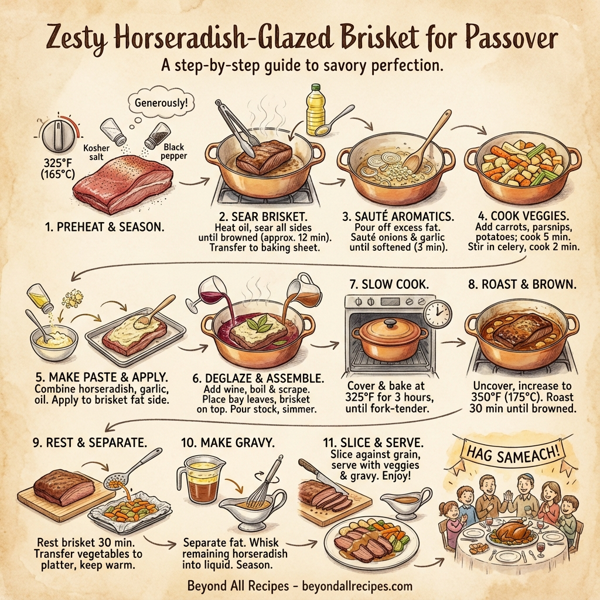
Preheat your oven to 325°F (165°C). Begin by generously seasoning the brisket with kosher salt and freshly ground black pepper on all sides.
2
In a large enameled cast-iron casserole, heat 3 tablespoons of vegetable oil over moderately high heat. Once hot, add the brisket and sear it, turning occasionally, until it is browned on all sides, approximately 12 minutes. Carefully transfer the brisket to a rimmed baking sheet, leaving the drippings in the casserole.
3
Reduce the heat to medium and pour off all but 4 tablespoons of the fat from the casserole. Add the sliced onions and garlic, sautéing until softened, about 3 minutes.
4
Add the carrots, parsnips, and potatoes to the casserole, cooking for another 5 minutes until they start to get brown spots. Lastly, stir in the celery and cook for an additional 2 minutes.
5
In a small bowl, combine 1/4 cup of prepared horseradish with the minced garlic and 1/2 tablespoon of vegetable oil to create a paste. Apply this mixture evenly over the fat side of the brisket.
6
Next, pour the red wine into the casserole, bringing it to a boil while scraping up any browned bits from the bottom. Move the vegetables to the sides and place the bay leaves in the center. Set the brisket on top, horseradish side up, and pour the beef stock around it. Bring everything to a gentle simmer.
7
Cover the casserole with a lid and transfer it to the oven, cooking for approximately 3 hours or until the brisket is fork-tender.
8
After 3 hours, increase the oven temperature to 350°F (175°C) and uncover the casserole. Roast for an additional 30 minutes until the brisket is nicely browned and the gravy has thickened.
9
Once done, carefully transfer the brisket to a carving board to rest for 30 minutes. Discard the bay leaves, and using a slotted spoon, transfer the cooked vegetables to a serving platter, covering them with foil to keep warm.
10
Pour the cooking liquid into a fat separator, allowing the fat to rise. Once separated, pour the liquid into a gravy boat and whisk in the remaining 1/4 cup of horseradish. Season with salt and pepper to taste.
11
Slice the brisket thinly against the grain and serve it with the vegetables. Drizzle some gravy over the meat and veggies, reserving the extra gravy for passing at the table.
Nutrition Information
37.5g
Fat
18.75g
Carbs
43.8g
Protein
Frequently Asked Questions
Frequently Asked Questions
What is the main protein used in the Zesty Horseradish-Glazed Brisket recipe?
The main protein used in this recipe is a 5-pound beef brisket, trimmed of excess fat.
Is this brisket recipe suitable for Passover?
Yes, this recipe is specifically designed to celebrate Passover and uses ingredients appropriate for the holiday.
What temperature should the oven be set to initially?
The oven should be preheated to 325°F (165°C) for the primary slow-cooking phase.
How long should I sear the brisket before putting it in the oven?
You should sear the brisket for approximately 12 minutes, turning it occasionally until it is browned on all sides.
What kind of oil is recommended for searing the beef?
The recipe calls for vegetable oil, using 3 tablespoons for the initial searing.
Which vegetables are slow-cooked alongside the brisket?
The dish includes onions, garlic, carrots, parsnips, Yukon Gold potatoes, and celery.
How is the horseradish glaze prepared for the brisket?
The glaze is a paste made by combining 1/4 cup of prepared horseradish with minced garlic and 1/2 tablespoon of vegetable oil.
What liquid is used to deglaze the casserole dish?
Two cups of dry red wine are used to deglaze the casserole and scrape up the browned bits.
Can I substitute the beef stock with another liquid?
Yes, the recipe suggests you can substitute the beef stock with chicken stock if preferred.
How long does the brisket need to cook in the oven while covered?
The brisket should be cooked covered for approximately 3 hours or until it is fork-tender.
What is the final oven temperature for the uncovered roasting phase?
The oven temperature should be increased to 350°F (175°C) for the final 30 minutes of roasting.
Why do I need to increase the oven temperature at the end of cooking?
Increasing the temperature to 350°F while the casserole is uncovered helps brown the brisket and thicken the gravy.
How long should the brisket rest before carving?
The brisket should rest on a carving board for 30 minutes after being removed from the oven.
How many servings does this brisket recipe make?
This recipe yields 8 servings.
How many calories are in one serving of this dish?
Each serving contains approximately 562.5 calories.
What is the protein content per serving?
There are approximately 43.8 grams of protein per serving.
What is the recommended way to slice the brisket for serving?
The brisket should be sliced thinly against the grain.
How is the final gravy prepared?
The cooking liquid is passed through a fat separator, then mixed with the remaining 1/4 cup of horseradish and seasoned with salt and pepper.
Should the bay leaves be kept in the final dish?
No, the bay leaves should be discarded after the cooking process is complete.
What type of potatoes are best for this recipe?
The recipe specifically calls for 4 medium Yukon Gold potatoes, peeled and cut into 1.5-inch pieces.
How should the carrots and parsnips be prepared?
Carrots should be cut into 1-inch thick pieces; parsnips should be halved lengthwise and then cut into 1-inch thick pieces.
What kind of cooking vessel is recommended for this brisket?
A large enameled cast-iron casserole is recommended for even heating and slow-cooking.
How much fat should be left in the pan after searing the meat?
After searing, you should pour off all but 4 tablespoons of the fat before sautéing the onions and garlic.
What total amount of horseradish is needed for the whole recipe?
The recipe uses 1/2 cup of prepared white horseradish in total, divided between the glaze and the gravy.
What is the fat content per serving of this dish?
The fat content is approximately 37.5 grams per serving.
Should the horseradish side of the brisket face up or down in the pot?
The brisket should be placed in the casserole with the horseradish-paste side (the fat side) facing up.
What kind of salt is suggested for seasoning?
The recipe calls for kosher salt for both initial seasoning and final adjustments.
How do you handle the cooked vegetables after roasting?
Using a slotted spoon, transfer the vegetables to a serving platter and cover them with foil to keep them warm while the meat rests.
What are some of the tags associated with this recipe?
Key tags include Passover, brisket, slow-cooked, holiday meat, and comfort food.
How many carbohydrates are in a single serving?
Each serving contains approximately 18.75 grams of carbohydrates.