Tomato and Red Wine-Marinated Broiled Flank Steak
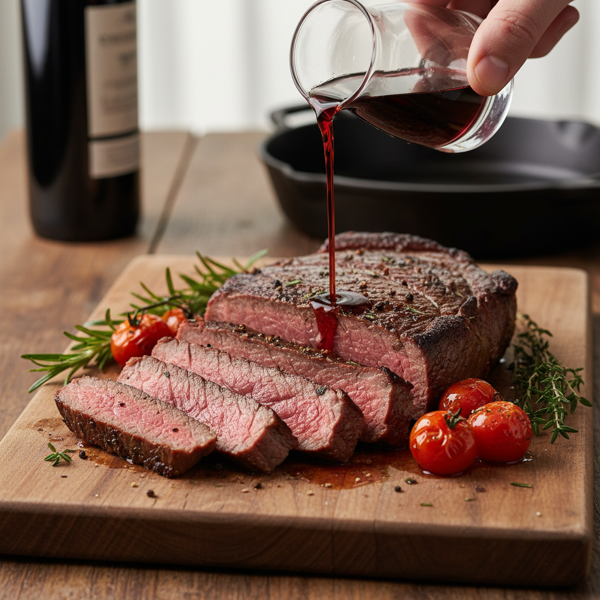
Experience the exquisite flavors of tender broiled flank steak marinated in a robust mixture of Italian-style crushed tomatoes, dry red wine, aromatic herbs, and a hint of Worcestershire sauce. This recipe draws inspiration from a classic Food & Wine magazine issue, offering a delightful balance of savory and tangy elements. Perfect for special occasions or an elegant meal at home, this dish is surprisingly straightforward, with most of the work done by the marinade. The flavorful sauce, reduced from the marinade, enhances each slice with its rich and velvety texture.
6
Servings
N/A
Calories
12
Ingredients
Ingredients
flank steaks
2.5 lbs (trimmed of all visible fat)
Italian-style crushed tomatoes
14 oz can (none)
beef broth
1.5 cups (none)
dry red wine
3/4 cup (such as Shiraz)
onion
1 large (halved, thinly sliced)
garlic
2 cloves (sliced thinly)
Worcestershire sauce
1 tablespoon (none)
dried thyme
1 teaspoon (none)
bay leaf
1 (none)
butter
2 tablespoons (cut into pieces)
salt
to taste (none)
black pepper
to taste (none)
Instructions
1
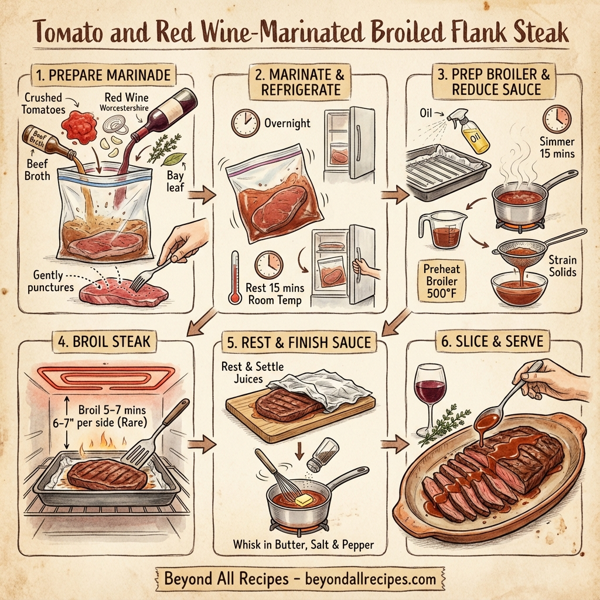
Begin by preparing the marinade: In a large resealable plastic bag, combine Italian-style crushed tomatoes, beef broth, dry red wine, thinly sliced onion, thinly sliced garlic, Worcestershire sauce, dried thyme, and bay leaf.
2
Using a fork or knife, gently pierce the flank steak in several places to allow the marinade to penetrate. Place the steak in the marinade, seal the bag, and shake gently to coat. Refrigerate overnight to allow the flavors to develop.
3
When ready to cook, remove the steak from the refrigerator and let it rest at room temperature for about 15 minutes.
4
Prepare a broiler pan by lining the bottom with foil and brushing the top rack with oil or spraying with nonstick cooking spray.
5
Place the steak on the prepared pan and let it sit while preheating your broiler to the BROIL setting (approximately 500°F).
6
In a small saucepan, pour the marinade and bring it to a simmer over medium-high heat. Allow it to reduce until it measures about 1 cup, approximately 15 minutes.
7
Strain the reduced marinade through a sieve to remove solids, returning the liquid to the saucepan and setting it aside off the heat.
8
Once marinade reduction is underway, position the broiler pan with the steak 6-7 inches below the broiler's heat source. Broil for 5-7 minutes on the first side, then flip to cook the opposite side for another 5 minutes for rare, or a bit longer according to your desired doneness.
9
After cooking, transfer the steak to a carving board, loosely cover with foil, and let it rest, allowing the juices to settle.
10
Return the strained marinade to a gentle heat and whisk in butter until melted and incorporated. Season with salt and black pepper to taste.
11
Slice the steak thinly against the grain and arrange on a serving platter, drizzling with some of the luscious sauce before serving.
Nutrition Information
Frequently Asked Questions
Frequently Asked Questions
What is Tomato and Red Wine-Marinated Broiled Flank Steak?
It is a dish featuring tender flank steak marinated in a rich mixture of Italian-style crushed tomatoes, dry red wine, herbs, and Worcestershire sauce, then broiled and served with a reduced sauce.
What cut of meat is used for this recipe?
The recipe calls for 2.5 lbs of flank steak, trimmed of all visible fat.
How long should the steak be marinated?
For the best flavor development, the steak should be refrigerated in the marinade overnight.
Why should I pierce the steak with a fork before marinating?
Gently piercing the steak in several places allows the marinade to penetrate the meat more effectively.
What type of red wine is best for the marinade?
A dry red wine such as Shiraz is recommended for this recipe.
What type of tomatoes should I use?
The recipe specifies using one 14 oz can of Italian-style crushed tomatoes.
How many people does this recipe serve?
This recipe is designed to provide 6 servings.
What temperature should the broiler be set to?
You should preheat your broiler to the BROIL setting, which is approximately 500F.
How far from the heat source should the steak be placed?
Position the broiler pan so the steak is 6-7 inches below the broiler's heat source.
How long do I cook the first side of the steak?
Broil the first side for 5-7 minutes.
How long should I cook the second side for a rare steak?
Cook the opposite side for approximately 5 minutes for a rare finish.
What should I do with the marinade after the steak is removed?
Pour the marinade into a small saucepan and simmer it until it reduces to about 1 cup.
How long does it take to reduce the marinade into a sauce?
It takes approximately 15 minutes of simmering over medium-high heat.
Why is the reduced marinade strained?
The marinade is strained through a sieve to remove the solids, such as the sliced onion and garlic, creating a smooth sauce.
When should I add the butter to the sauce?
Whisk the butter into the strained marinade after it has been reduced and returned to gentle heat.
Is it necessary to let the steak rest after broiling?
Yes, transferring the steak to a carving board and letting it rest allows the juices to settle back into the meat.
How should the flank steak be sliced?
The steak should be sliced thinly against the grain to ensure maximum tenderness.
How do I prepare the garlic and onion for the marinade?
The onion should be halved and thinly sliced, and the garlic should be sliced thinly.
What ingredients provide the savory 'umami' flavor?
The beef broth, Worcestershire sauce, and crushed tomatoes all contribute to the savory profile of the dish.
Can I use dried herbs in this recipe?
Yes, the recipe specifically calls for 1 teaspoon of dried thyme and 1 bay leaf.
Should I salt the meat before marinating?
The recipe suggests seasoning with salt and black pepper to taste at the final stage of preparing the sauce.
How do I prepare the broiler pan?
Line the bottom with foil for easy cleanup and brush the top rack with oil or spray with nonstick cooking spray.
Does the steak need to reach room temperature before cooking?
Yes, let the steak rest at room temperature for about 15 minutes after removing it from the refrigerator.
What is the final step before serving?
Arrange the sliced steak on a serving platter and drizzle it with the prepared sauce.
Can I use this marinade for other types of steak?
While designed for flank steak, this tomato and red wine marinade would also work well with skirt steak or London Broil.
What is the consistency of the finished sauce?
Once reduced and whisked with butter, the sauce becomes rich and velvety.
Is the onion left in the final sauce?
No, the onion is strained out with a sieve along with the garlic and bay leaf before the final sauce is finished.
How much beef broth is required?
The recipe requires 1.5 cups of beef broth.
What is the purpose of the bay leaf?
The bay leaf adds a subtle aromatic depth to the marinade during the overnight soaking process.
Can the marinade be made ahead of time?
Yes, the marinade is meant to be prepared and combined with the meat at least one day before you plan to cook.