Savory Tuna Ramen Stir-Fry
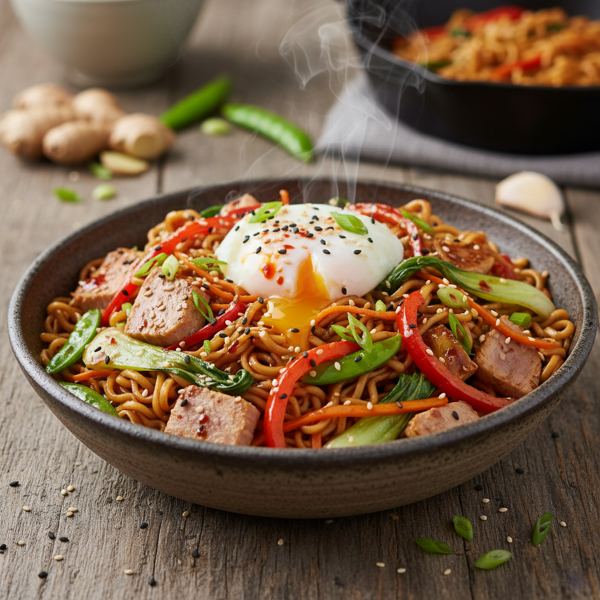
This Savory Tuna Ramen Stir-Fry is a delightful fusion of flavors that's perfect for busy college students looking for an affordable and satisfying meal. Inspired by my time studying abroad, this dish combines the comforting warmth of ramen noodles with the protein-packed goodness of canned tuna and colorful frozen vegetables. It's quick to prepare, endlessly customizable, and incredibly filling - making it an ideal choice for those late-night study sessions or post-class cravings. You can whip it up in under 15 minutes and enjoy a hearty dish that not only tastes great but also saves you money!
1-2 servings
Servings
250
Calories
3
Ingredients
Ingredients
Tuna in vegetable oil
1 (6 ounce) can (drained)
Ramen noodles
1 (3 ounce) packet (any flavor)
Frozen mixed vegetables
1/2 cup (no preparation needed)
Instructions
1
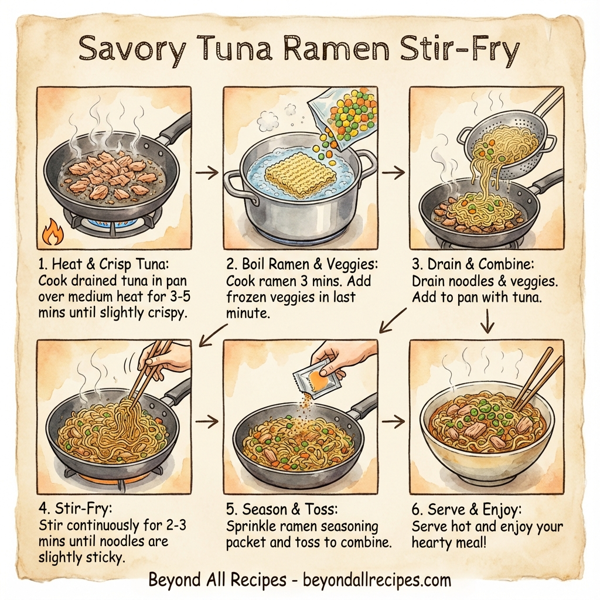
In a nonstick frying pan, heat over medium heat and add the drained tuna. Cook until it is heated through and has a slightly crispy texture, about 3-5 minutes.
2
While the tuna cooks, bring a separate pot of water to a boil. Add the ramen noodles and cook for 3 minutes. During the last minute of cooking, add the frozen mixed vegetables to the pot.
3
Once the ramen and vegetables are cooked, drain them thoroughly and add them to the frying pan with the sautéed tuna.
4
Stir the mixture continuously until the noodles begin to get slightly sticky, about 2-3 minutes.
5
Sprinkle the seasoning packet from the ramen over the mixture and toss everything together to combine evenly.
6
Serve hot and enjoy your hearty meal!
Nutrition Information
7.5g
Fat
30g
Carbs
17.5g
Protein
1.5g
Fiber
Frequently Asked Questions
Frequently Asked Questions
What is Savory Tuna Ramen Stir-Fry?
It is a delightful fusion of flavors combining ramen noodles with protein-packed canned tuna and frozen vegetables.
How long does it take to prepare this dish?
You can whip up this meal in under 15 minutes, making it perfect for busy schedules.
Is this recipe budget-friendly?
Yes, it is designed to be very affordable for college students, using inexpensive pantry staples.
What type of tuna is recommended?
The recipe calls for one 6-ounce can of tuna in vegetable oil, drained.
Can I use tuna in water instead of oil?
Yes, but you may want to add a small amount of oil to the pan to help the tuna get crispy.
What flavor of ramen should I use?
Any flavor of ramen works for this recipe since the seasoning packet is added at the end.
How many servings does this recipe provide?
This recipe typically makes 1 to 2 servings.
Can I add extra vegetables to the stir-fry?
Absolutely, you can increase the amount of frozen mixed vegetables or add fresh ones to customize it.
Is this a healthy meal option?
It provides a good balance of protein and vegetables, though you should be mindful of the sodium in the ramen packet.
How many calories are in a serving?
The dish contains approximately 250 calories per serving.
Can this recipe be made gluten-free?
Yes, if you substitute the ramen with gluten-free noodles and ensure the seasoning is gluten-free.
What is the best way to cook the tuna?
Sauté it in a nonstick frying pan for 3-5 minutes until it is heated through and slightly crispy.
Do I need to boil the ramen noodles first?
Yes, boil the noodles for 3 minutes and add the vegetables during the last minute of cooking.
When do I add the ramen seasoning?
Sprinkle the seasoning packet over the mixture after combining the tuna, noodles, and vegetables in the pan.
Can I use fresh vegetables instead of frozen?
Yes, though fresh vegetables may require a slightly longer cooking time than frozen ones.
How much protein is in this Savory Tuna Ramen?
This recipe contains approximately 17.5g of protein per serving.
Is this recipe suitable for meal prepping?
While it can be stored, it is best enjoyed fresh when the tuna is slightly crispy and the noodles have the best texture.
How should I store leftover stir-fry?
Store any leftovers in an airtight container in the refrigerator for up to 3 days.
What is the best way to reheat leftovers?
Reheat in a microwave or on the stovetop with a small splash of water to keep the noodles moist.
Why is this recipe good for college students?
It is fast, cheap, uses minimal equipment, and provides a filling meal for late-night study sessions.
How can I make the dish spicier?
You can add red pepper flakes, sriracha, or chili oil during the final stir-frying step.
Can I use a different protein besides tuna?
Yes, canned chicken or even tofu can be substituted for the tuna.
Why do I need to cook the tuna until it's crispy?
Sautéing the tuna adds a pleasant texture and deeper flavor to the finished stir-fry.
How many main ingredients are required?
There are 3 main ingredients: canned tuna, a ramen packet, and frozen mixed vegetables.
What is the final texture of the dish?
The noodles become slightly sticky and the tuna is slightly crispy, creating a hearty mouthfeel.
Can I use low-sodium ramen?
Yes, using a low-sodium ramen brand is a great way to reduce the overall salt content of the meal.
Does this meal contain dietary fiber?
Yes, it provides about 1.5g of fiber, mainly from the mixed vegetables.
Can I add soy sauce to this recipe?
Yes, a splash of soy sauce can enhance the savory umami flavor of the dish.
Is it okay to double the recipe?
Yes, simply double all ingredients; just ensure your frying pan is large enough to handle the volume.
Can I add an egg to the stir-fry?
Yes, you can scramble an egg into the mixture during the final 2-3 minutes of cooking for extra richness.