Savory Rosemary Artisan Bread
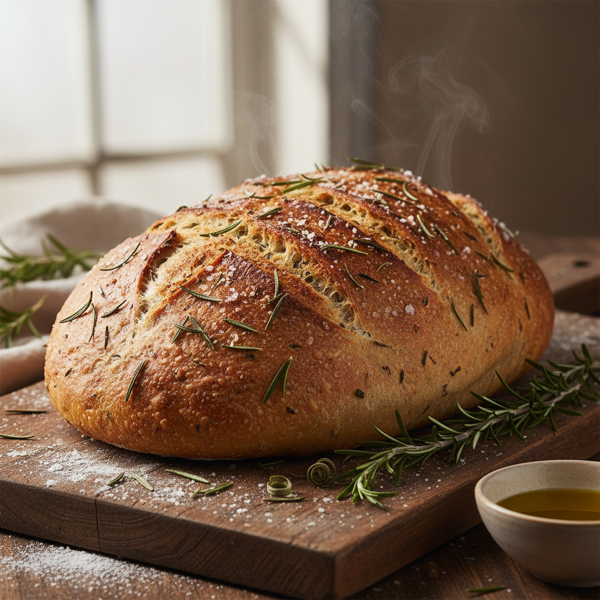
Indulge in the delightful flavors of this homemade Savory Rosemary Artisan Bread, inspired by the beloved bread served at Romano's Macaroni Grill. Perfectly crispy on the outside and soft on the inside, this aromatic bread is infused with fresh rosemary and a hint of sweetness. It's a wonderful addition to any meal or can be enjoyed on its own, served warm with butter or olive oil. Gather your ingredients and share this delectable treat with family and friends. With just a few simple steps, you'll create two beautiful loaves of bread that will impress everyone at the table.
N/A
Servings
N/A
Calories
7
Ingredients
Ingredients
yeast
1 tablespoon (active dry or instant yeast)
sugar
1 tablespoon (granulated sugar)
warm water
1 cup (between 100°F and 110°F)
flour
2 1/2 cups (all-purpose flour, plus more for kneading if necessary)
salt
1 teaspoon (table salt or sea salt)
rosemary
2 tablespoons (fresh, chopped)
butter
2 tablespoons (melted, plus more for brushing)
Instructions
1
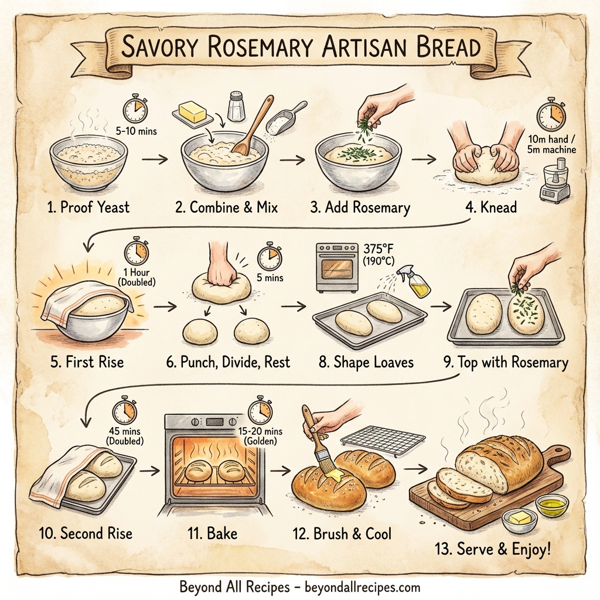
In a large bowl or food processor, combine the yeast, sugar, and warm water. Allow the mixture to sit for about 5 to 10 minutes until it becomes bubbly and frothy.
2
Once bubbly, add 1 tablespoon of softened butter, salt, and 2 cups of flour to the mixture. Stir together until well combined.
3
Mix in 1 tablespoon of the chopped fresh rosemary to incorporate more flavor.
4
Knead the dough for approximately 10 minutes by hand or 5 minutes using a food processor until smooth and elastic. If the dough is too sticky, gradually add more flour as needed.
5
Lightly coat a large bowl with oil, place the dough inside, and cover it with a clean towel. Allow the dough to rise in a warm place for about 1 hour or until it has doubled in size.
6
Once risen, punch down the dough to release air and divide it into two equal portions. Let the dough rest for 5 minutes to relax the gluten.
7
Preheat your oven to 375°F (190°C) and prepare a baking pan or cookie sheet by spraying it with cooking spray.
8
Shape each portion of dough into small rounded oval loaves and place them onto the prepared baking surface.
9
Sprinkle the remaining 1 tablespoon of chopped rosemary evenly over the loaves and gently press it into the surface to adhere.
10
Cover the loaves loosely with a towel and let them rise again until doubled in size, approximately 45 minutes.
11
Once risen, place the loaves in the preheated oven and bake for 15 to 20 minutes or until they are lightly golden brown on top.
12
Carefully remove the loaves from the oven and brush the tops with the remaining 1 tablespoon of melted butter. Add a sprinkle of salt if desired.
13
Allow the bread to cool slightly before slicing and serving. Enjoy with butter, olive oil, or alongside your favorite meal.
Nutrition Information
Frequently Asked Questions
Frequently Asked Questions
What is Savory Rosemary Artisan Bread?
It is a homemade artisan bread inspired by Romano's Macaroni Grill, featuring a crispy crust, soft interior, and fresh rosemary infusion.
What inspired this bread recipe?
This recipe is inspired by the savory rosemary bread served at Romano's Macaroni Grill.
How many loaves does this recipe make?
This recipe yields two beautiful loaves of artisan bread.
What type of yeast should I use?
You can use 1 tablespoon of either active dry or instant yeast.
What is the ideal temperature for the water?
The warm water should be between 100°F and 110°F to properly activate the yeast.
How much rosemary is needed?
You will need a total of 2 tablespoons of fresh, chopped rosemary.
What kind of flour is best for this recipe?
The recipe calls for 2 1/2 cups of all-purpose flour.
How long should the yeast mixture sit initially?
Allow the yeast, sugar, and warm water to sit for 5 to 10 minutes until it becomes bubbly and frothy.
How long should I knead the dough by hand?
Knead the dough for approximately 10 minutes by hand until it is smooth and elastic.
Can I use a food processor to knead the dough?
Yes, you can use a food processor to knead the dough for about 5 minutes.
What do I do if the dough is too sticky?
If the dough is too sticky during kneading, gradually add more flour as needed.
How long is the first rising period?
The dough should rise in a warm place for about 1 hour or until it has doubled in size.
What is the purpose of punching down the dough?
Punching down the dough after the first rise helps release air and redistribute the yeast.
How long should the dough rest after being divided?
Let the divided dough rest for 5 minutes to relax the gluten before shaping.
At what temperature should the oven be preheated?
Preheat your oven to 375°F (190°C).
How should I prepare the baking pan?
Prepare a baking pan or cookie sheet by spraying it with cooking spray.
What shape should the loaves be?
Shape each portion into small rounded oval loaves.
When do I add the rosemary to the surface?
Sprinkle 1 tablespoon of chopped rosemary over the loaves after shaping and before the second rise.
How long is the second rise?
The loaves should rise a second time for approximately 45 minutes until doubled in size.
How long does the bread bake?
Bake the loaves for 15 to 20 minutes.
How do I know when the bread is finished baking?
The bread is done when the tops are lightly golden brown.
What should I brush on top of the baked bread?
Brush the tops of the warm loaves with 1 tablespoon of melted butter.
Can I add extra salt to the crust?
Yes, you can add a sprinkle of salt over the buttered tops if desired.
Should the bread cool before slicing?
Allow the bread to cool slightly before slicing and serving.
What are the recommended serving suggestions?
Enjoy the bread warm with butter, olive oil, or as a side to your favorite meal.
How much sugar is in the recipe?
The recipe uses 1 tablespoon of granulated sugar.
What is the total amount of butter needed?
The recipe requires 2 tablespoons of butter in total (one for the dough and one for brushing).
Is this a savory or sweet bread?
This is a savory bread characterized by rosemary and salt, though it has a hint of sweetness from the sugar.
What category does this recipe fall under?
This is categorized as a savory artisan yeast bread.
Is this recipe suitable for beginners?
Yes, with just a few simple steps and common ingredients, it is designed to be accessible for home bakers.