Rustic Italian Chicken Cacciatore
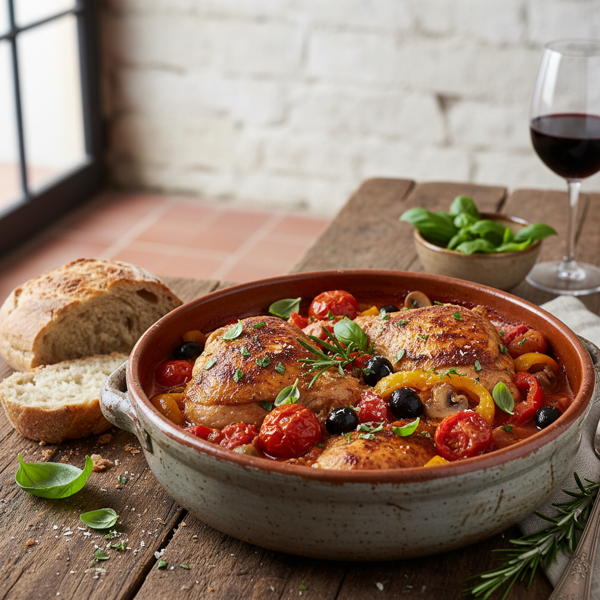
Dive into the comforting embrace of Rustic Italian Chicken Cacciatore, a classic dish inspired by the beloved Giada de Laurentiis. This vibrant and hearty stew features succulent chicken thighs and breasts simmered in a rich sauce of bell peppers, onions, garlic, and tomatoes, all elevated by a splash of white wine. Infused with aromatic oregano and fresh basil, this dish captures the essence of Italian home cooking, delivering a flavor-packed experience that will transport you to a sun-drenched villa with every bite. Perfect for dinner parties or a cozy family meal, this easy-to-make dish looks and tastes like it simmered for hours, yet can be prepared in under an hour. Enjoy it with crusty bread or over a bed of pasta to soak up the delicious sauce.
N/A
Servings
N/A
Calories
15
Ingredients
Ingredients
Chicken thighs
4 (bone-in or skinless, if preferred)
Chicken breasts
2 (skin removed if desired)
Salt
2 teaspoons (divided)
Black pepper
1 teaspoon (freshly ground, divided)
All-purpose flour
1/2 cup (for dredging)
Olive oil
3 tablespoons (for sautéing)
Red bell pepper
1 large (chopped)
Onion
1 large (chopped)
Garlic cloves
3 (minced)
Dry white wine
3/4 cup (for sauce)
Diced tomatoes
28 ounces (canned with juice)
Reduced-sodium chicken broth
3/4 cup (for sauce)
Capers
3 tablespoons (drained, optional)
Dried oregano leaves
1.5 teaspoons (for flavor)
Fresh basil leaves
1/4 cup (coarsely chopped for garnish)
Instructions
1
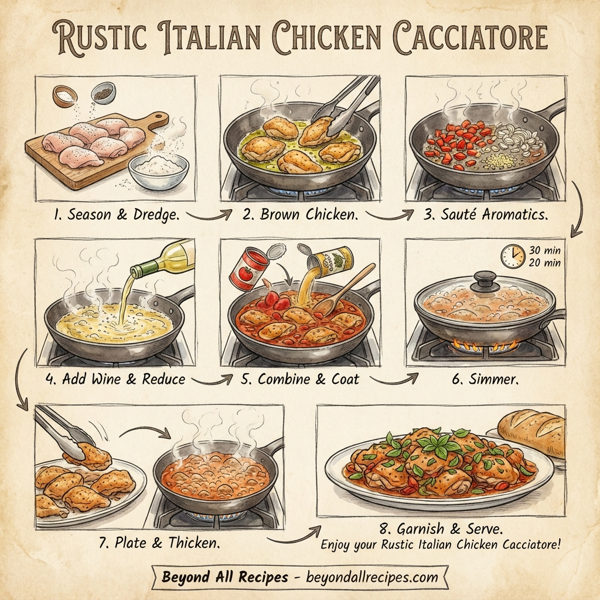
1. Start by seasoning the chicken thighs and breasts with 1 teaspoon of salt and 1 teaspoon of black pepper. Then, dredge the chicken in all-purpose flour, ensuring they're lightly coated.
2
2. In a large, heavy saucepan, heat the olive oil over medium-high heat. Add the coated chicken pieces, making sure not to overcrowd the pan. Sauté them for about 5 minutes on each side or until they are golden brown. If necessary, cook in batches to maintain the right temperature.
3
3. Once browned, transfer the chicken to a plate and set it aside. In the same pan, add the chopped red bell pepper, onion, and finely chopped garlic. Sauté for about 5 minutes, or until the onions are tender.
4
4. Season the vegetable mixture with additional salt and pepper to taste. Pour in the dry white wine, bringing it to a simmer until it reduces by half, taking about 3 minutes.
5
5. Stir in the diced tomatoes (with their juices), chicken broth, optional capers, and dried oregano. Carefully return the browned chicken to the pan, turning it to ensure it's well-coated with the sauce.
6
6. Bring the mixture to a gentle simmer. Cook over medium-low heat until the chicken is thoroughly cooked, about 30 minutes for the chicken breasts and 20 minutes for the thighs.
7
7. Once cooked, use tongs to transfer the chicken to a serving platter. If the sauce needs thickening, increase the heat and let it boil for a few minutes. Skim off any excess fat, then pour the sauce over the chicken.
8
8. Finish by generously sprinkling fresh basil over the top before serving. Enjoy your Rustic Italian Chicken Cacciatore warm!
Nutrition Information
Frequently Asked Questions
Frequently Asked Questions
What is Rustic Italian Chicken Cacciatore?
It is a classic Italian hunter-style stew consisting of chicken simmered with bell peppers, onions, garlic, and tomatoes in a white wine sauce.
What does 'Cacciatore' mean?
In Italian, 'Cacciatore' means 'hunter,' referring to a meal prepared 'hunter-style' with onions, herbs, and often tomatoes and bell peppers.
Can I use only chicken breasts for this recipe?
Yes, you can use only chicken breasts, though they may cook slightly faster than thighs and can be less juicy if overcooked.
Is it better to use bone-in or boneless chicken?
This recipe uses a mix of chicken thighs and breasts. Bone-in pieces generally provide more flavor to the sauce during the simmering process.
What type of wine should I use for Chicken Cacciatore?
A dry white wine, such as Pinot Grigio or Sauvignon Blanc, is best for this recipe.
Can I substitute the white wine?
Yes, you can substitute the wine with additional chicken broth and a tablespoon of white wine vinegar or lemon juice for acidity.
Why do I need to dredge the chicken in flour?
Dredging helps the chicken brown more effectively and acts as a thickening agent for the sauce as it simmers.
How can I make this recipe gluten-free?
Simply replace the all-purpose flour with a gluten-free flour blend or cornstarch for dredging the chicken.
What vegetables are in this dish?
The primary vegetables are red bell peppers, onions, and garlic.
Can I add other vegetables to the stew?
Yes, many people enjoy adding mushrooms, carrots, or celery to their Chicken Cacciatore for extra texture and flavor.
Should the chicken skin be removed?
The recipe suggests removing the skin if desired to reduce fat, but keeping it on can add more flavor if you prefer.
What do capers add to the recipe?
Capers provide a salty, briny pop of flavor that complements the acidity of the tomatoes and wine.
How long does it take to cook this dish?
The dish takes about 15-20 minutes of prep and roughly 30-40 minutes of total cooking time.
Can I make Chicken Cacciatore in a slow cooker?
Yes. Brown the chicken and sauté the vegetables first, then place everything in a slow cooker on low for 4-6 hours.
Is this recipe suitable for an Instant Pot?
Yes. Use the sauté function for the initial steps, then pressure cook on high for about 10-12 minutes with a natural release.
What are the best side dishes for Chicken Cacciatore?
It is traditionally served with crusty Italian bread, over a bed of pasta (like linguine or rigatoni), or with creamy polenta.
How do I store leftovers?
Store leftovers in an airtight container in the refrigerator for up to 3 to 4 days.
Can I freeze Chicken Cacciatore?
Yes, this dish freezes very well. Store it in a freezer-safe container for up to 3 months.
What is the best way to reheat the leftovers?
Reheat gently on the stovetop over medium-low heat until warmed through, or use a microwave.
Can I use fresh tomatoes instead of canned?
Yes, you can use about 2 pounds of fresh, blanched, and peeled tomatoes, though you may need to add a bit of tomato paste for depth.
What kind of canned tomatoes should I buy?
Diced tomatoes in their juice are recommended. For the best flavor, look for San Marzano tomatoes.
Is this a healthy recipe?
Yes, it is high in protein and contains many nutrients from the bell peppers, onions, and tomatoes.
Can I use red wine instead of white wine?
Yes, using red wine will result in a deeper, richer, and darker sauce, which is also a traditional variation.
How do I thicken the sauce if it is too watery?
You can remove the chicken and simmer the sauce on high heat for a few minutes to reduce it, or stir in a small flour slurry.
What if I don't have fresh basil?
You can use fresh parsley for garnish or add a teaspoon of dried basil earlier in the cooking process.
Can I use dried oregano instead of fresh?
The recipe already calls for dried oregano, which holds its flavor well during the simmering process.
Is this dish spicy?
No, this is a savory dish. If you want heat, you can add a pinch of red pepper flakes when sautéing the vegetables.
Can I prepare this ahead of time?
Yes, like many stews, the flavors often improve the next day, making it an excellent make-ahead meal.
What type of oil is best for browning the chicken?
Olive oil is ideal for its flavor and its ability to withstand medium-high sauté temperatures.
Who inspired this specific version of the recipe?
This rustic version is inspired by the cooking style of Giada De Laurentiis.