Nepalese Aromatic Lamb Curry
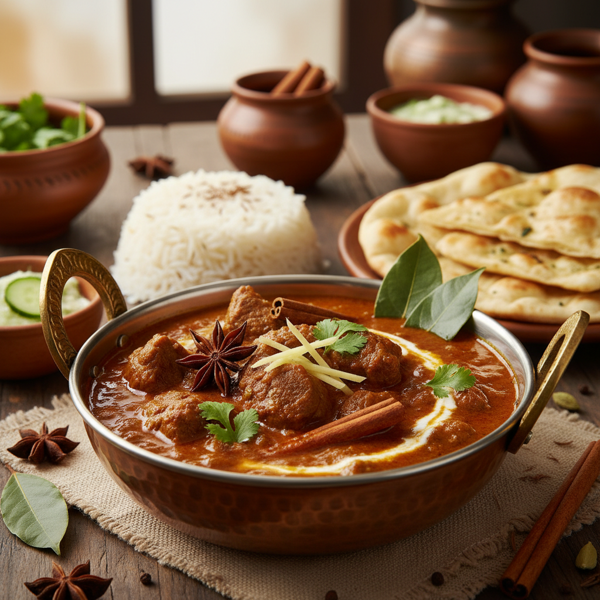
Experience the rich flavors of Nepal with this Aromatic Lamb Curry, also known as Lamb Pakuwa. This slow-cooked dish features tender morsels of lamb marinated in a fragrant blend of spices and herbs, including cumin, turmeric, and ginger. The lamb is cooked to perfection until it is melt-in-your-mouth tender and served dry, allowing the deep flavors of the spices to shine through. Paired beautifully with rice pilaf or traditional roti, this dish is a wonderful representation of Nepali cuisine that will transport you to the heart of the Himalayas with every bite.
3
Servings
N/A
Calories
17
Ingredients
Ingredients
Boneless lamb
2 lbs (Cut into 1-inch cubes)
Onion
1 cup (Chopped)
Tomatoes
1/2 cup (Chopped)
Cumin powder
1 teaspoon (Ground)
Chili paste
1 tablespoon (Made from red chili)
Garlic
1 tablespoon (Minced)
Gingerroot
1 tablespoon (Minced)
Szechwan pepper
1/2 teaspoon (Crushed)
Turmeric
1 teaspoon (Ground)
Brown sugar
1 tablespoon (Packed)
Fresh cilantro
2 tablespoons (Chopped)
Dried red chilies
2 (Whole)
Cumin seed
1 teaspoon (Whole)
Broth or water
1 cup (Used for cooking)
Cooking oil
5 tablespoons
Salt and pepper
To taste
Chopped scallion
1 cup (Chopped)
Instructions
1
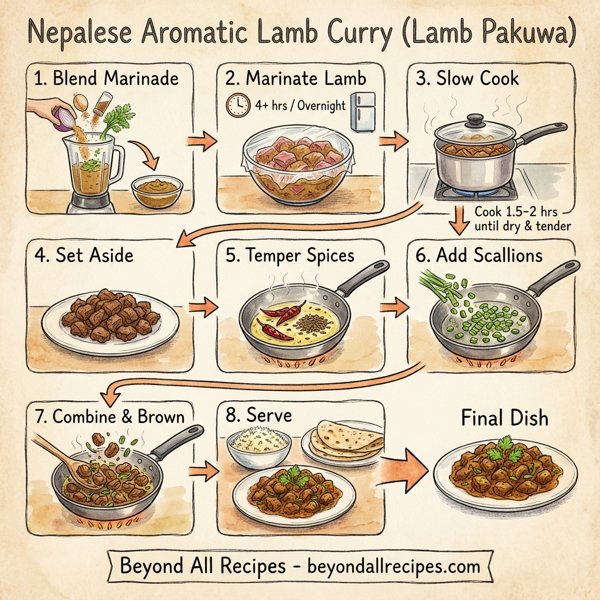
Begin by creating a smooth marinade. In a blender, combine the chopped onions, tomatoes, cumin powder, chili paste, minced garlic, minced ginger, Szechwan pepper, turmeric, brown sugar, and chopped cilantro. Blend until you achieve a uniform paste.
2
Place the lamb cubes in a mixing bowl and coat thoroughly with the marinade. Cover and refrigerate, allowing it to marinate for at least 4 hours, or preferably overnight for deeper flavor.
3
After marinating, heat 3 tablespoons of cooking oil in a large saucepan over medium-low heat. Add the marinated lamb and all the marinade. Cook covered, stirring occasionally, until the lamb is tender and most of the liquid has evaporated, around 1.5 to 2 hours. Ensure that the curry becomes dry, allowing the flavors to concentrate.
4
Once the lamb is ready, transfer it to a large plate and set aside.
5
In a separate sauté pan, heat the remaining 2 tablespoons of oil over medium heat. Add the dried red chilies and cumin seeds, frying them until they darken slightly and become fragrant.
6
Add the chopped scallions to the sauté pan and toss them for about 1 minute, allowing them to soften and infuse their flavor into the oil.
7
Introduce the cooked lamb into the sauté pan, and carefully mix to combine, then allow it to brown slightly. Continue stirring for a few minutes to help develop the rich flavors.
8
Serve the Nepalese Aromatic Lamb Curry hot, accompanied by fluffy rice pilaf or warm roti for a complete meal.
Nutrition Information
Frequently Asked Questions
Frequently Asked Questions
What is Nepalese Aromatic Lamb Curry?
Also known as Lamb Pakuwa, it is a slow-cooked dish featuring tender lamb marinated in fragrant Himalayan spices and served as a dry curry.
What type of meat is recommended for this recipe?
The recipe calls for 2 lbs of boneless lamb, cut into 1-inch cubes.
How long should the lamb be marinated?
The lamb should marinate for at least 4 hours, though leaving it overnight is preferred for a deeper flavor profile.
What ingredients are needed for the marinade?
The marinade consists of chopped onions, tomatoes, cumin powder, chili paste, minced garlic, minced ginger, Szechwan pepper, turmeric, brown sugar, and chopped cilantro.
How many servings does this recipe provide?
This recipe is designed to serve 3 people.
What is the cooking time for the lamb?
The lamb should be cooked covered for approximately 1.5 to 2 hours until tender.
What makes this a 'dry' curry?
The dish is cooked until most of the liquid has evaporated, allowing the flavors to concentrate and the spices to coat the meat directly.
What sides pair well with Lamb Pakuwa?
It is traditionally served with rice pilaf or warm roti.
How do I prepare the marinade?
Combine the marinade ingredients in a blender and process until you achieve a uniform, smooth paste.
What whole spices are used in the final tempering?
Dried red chilies and whole cumin seeds are fried in oil to aromatic perfection before adding the cooked lamb.
Is there sugar in this recipe?
Yes, one tablespoon of packed brown sugar is included in the marinade to balance the spices.
How much oil is required in total?
A total of 5 tablespoons of cooking oil is used: 3 for the main cooking and 2 for the final sautéing step.
What is the role of Szechwan pepper in this dish?
Szechwan pepper provides a unique, authentic Himalayan aroma and a slight tingling sensation characteristic of Nepali cuisine.
Do I need to add water during cooking?
The recipe suggests using 1 cup of broth or water during the slow-cooking phase.
When are the scallions added?
Chopped scallions are added to the sauté pan after the whole spices have darkened, just before the lamb is reintroduced.
Should the lamb be browned?
Yes, in the final step, the cooked lamb is tossed with sautéed spices and scallions to brown slightly and develop rich flavors.
How much ginger and garlic are used?
The recipe calls for 1 tablespoon of minced garlic and 1 tablespoon of minced gingerroot.
What is the texture of the lamb after cooking?
The lamb is cooked until it is melt-in-your-mouth tender.
Can I use red chili powder instead of paste?
The recipe specifies 1 tablespoon of chili paste made from red chili for the best texture in the marinade.
Is fresh cilantro used in the recipe?
Yes, 2 tablespoons of chopped fresh cilantro are blended directly into the marinade paste.
What size should the onion and tomatoes be chopped?
The recipe requires 1 cup of chopped onion and 1/2 cup of chopped tomatoes for the marinade.
What is the first step in cooking after marinating?
Heat 3 tablespoons of oil in a large saucepan and add the marinated lamb along with all the marinade.
How often should I stir the lamb while it simmers?
You should stir the lamb occasionally to ensure even cooking and to prevent sticking as the liquid evaporates.
Are the dried red chilies chopped?
No, the recipe uses 2 whole dried red chilies for tempering.
What is the primary flavor profile of this curry?
It is aromatic, savory, and spicy, with prominent notes of cumin, ginger, and turmeric.
Does the recipe include salt?
Yes, salt and pepper are added to taste during the preparation.
What is the purpose of the final sautéing step?
The final sauté infuses the meat with the fragrance of whole spices and scallions while giving the lamb a slightly browned finish.
What are the tags associated with this recipe?
The tags include nepalese, lamb curry, slow cooked, spicy, authentic, dry curry, and comfort food.
Is the heat level adjustable?
Yes, the heat can be adjusted by varying the amount of chili paste and dried red chilies.
Can I serve this with anything other than rice or roti?
While rice and roti are traditional, it can also be enjoyed with other flatbreads or as part of a larger Nepali feast.