Luscious Chicken Parmigiana with Sweet Marinara
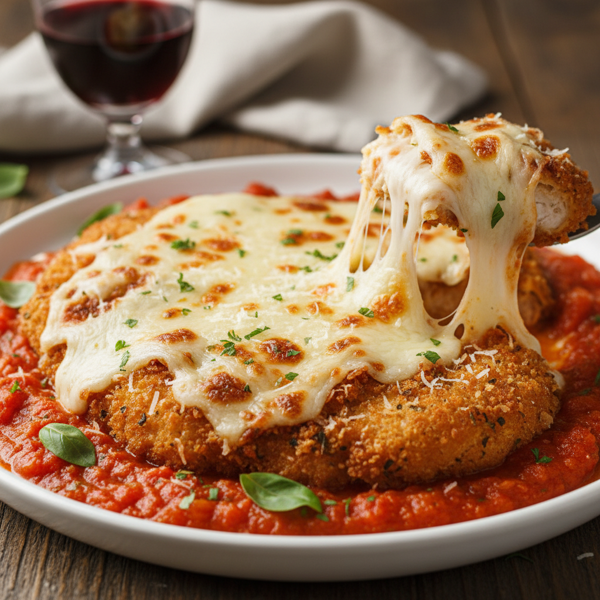
Indulge in a richer, heartwarming take on a classic Italian favorite with my Luscious Chicken Parmigiana with Sweet Marinara. This recipe features tender, golden-brown chicken cutlets, perfectly breaded and baked, then drenched in a homemade marinara sauce that strikes the perfect balance between sweetness and acidity. Inspired by family traditions and crafted from various authentic Italian recipes, this sauce simmers slowly to develop bold flavors that will have your family and friends coming back for seconds. The addition of freshly grated parmesan and slices of creamy provolone adds layers of savory richness. This dish isn't just for special occasions; it's a satisfying weeknight dinner served alongside your choice of spaghetti or angel hair pasta. Double the recipe and freeze leftovers for an even more convenient go-to meal that you'll cherish sharing with loved ones.
5
Servings
N/A
Calories
24
Ingredients
Ingredients
olive oil
1-2 tablespoons (none)
large onion
1 (chopped)
garlic cloves
2 (minced)
tomato paste
2 (18 ounce) cans (none)
water
108 ounces (fill one of the empty tomato paste cans with water 6 times)
large bay leaves
2 (none)
fresh parsley
1-2 tablespoons (chopped fine)
fresh oregano
1 tablespoon (chopped fine)
fresh basil
1 tablespoon (chopped fine)
fresh ground black pepper
1/4 teaspoon (none)
red pepper flakes
optional (1/4 teaspoon) (none)
garlic powder
1 teaspoon (none)
granulated sugar
1/4 cup (can use more or less)
freshly grated parmesan cheese
1/2 cup (none)
pepperoni
1 cup (sliced (optional))
boneless skinless chicken breasts
5 (cutlets)
eggs
2 (slightly beaten)
salt
1 teaspoon (none)
fresh ground black pepper
1/8 teaspoon (none)
fine dry Italian seasoned breadcrumbs
1 cup (none)
vegetable oil
1/2 cup (for frying)
homemade pasta sauce
3 cups (for serving)
grated parmesan cheese
1/2 cup (for topping)
provolone cheese
8 ounces (sliced)
Instructions
1
Prepare the Sauce:
2
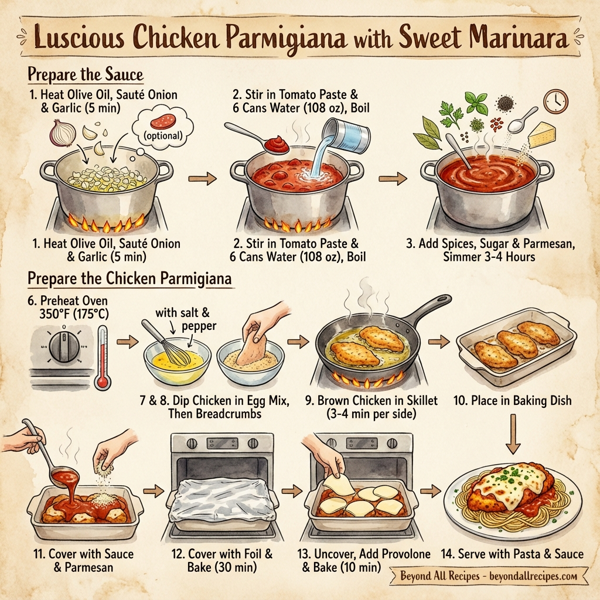
1. In a Dutch oven or large saucepot, heat the olive oil over medium heat for about 1-2 minutes.
3
2. Add the chopped onion and minced garlic; sauté until softened, about 5 minutes, adding the pepperoni if using.
4
3. Stir in the tomato paste and 6 cans of water (which equals 108 ounces). Bring the mixture to a boil, ensuring the tomato paste is fully dissolved.
5
4. Add bay leaves, parsley, oregano, basil, black pepper, red pepper flakes (if using), garlic powder, sugar, and grated parmesan cheese, stirring well.
6
5. Once boiling, reduce to medium-low heat and let simmer uncovered for 3-4 hours or until the sauce thickens to your desired consistency.
7
Prepare the Chicken Parmigiana:
8
6. Preheat your oven to 350°F (175°C).
9
7. In a bowl, mix the slightly beaten eggs with salt and black pepper. In another bowl, place the Italian seasoned breadcrumbs.
10
8. Dip each chicken cutlet in the egg mixture, allowing excess to drip off, then coat thoroughly with breadcrumbs.
11
9. In a skillet, heat vegetable oil until very hot. Brown each chicken cutlet on both sides (approximately 3-4 minutes per side).
12
10. Remove the browned chicken and place it in a shallow baking dish. Pour out any excess oil from the skillet.
13
11. Cover the chicken cutlets generously with the simmered marinara sauce and sprinkle with additional parmesan cheese.
14
12. Cover the dish with foil and bake for 30 minutes.
15
13. Uncover the dish and place slices of provolone cheese on top of the chicken. Bake for an additional 10 minutes or until the cheese is bubbly and golden.
16
14. Serve the chicken parmigiana with a generous side of spaghetti or angel hair pasta, topped with the remaining marinara sauce.
Nutrition Information
Frequently Asked Questions
Frequently Asked Questions
What makes this Chicken Parmigiana recipe unique?
This recipe features a unique sweet marinara sauce that balances acidity with sugar, inspired by family traditions and slow-simmered for bold flavor.
How many servings does this recipe yield?
This recipe is designed to serve 5 people.
What are the main ingredients for the sweet marinara sauce?
The sauce is made from tomato paste, water, olive oil, onion, garlic, sugar, and a blend of fresh herbs like parsley, oregano, and basil.
How long should I simmer the marinara sauce?
The sauce should simmer uncovered for 3 to 4 hours to reach the desired thickness and flavor profile.
Can I add meat to the sauce?
Yes, the recipe suggests adding 1 cup of sliced pepperoni for additional flavor if desired.
What type of chicken should I use?
The recipe calls for 5 boneless skinless chicken breasts prepared as cutlets.
What is the breading process for the chicken?
Dip each cutlet in a mixture of beaten eggs, salt, and pepper, then coat thoroughly with Italian seasoned breadcrumbs.
At what temperature should the oven be preheated?
The oven should be preheated to 350°F (175°C).
How long do I fry the chicken cutlets?
Brown each chicken cutlet in hot vegetable oil for approximately 3-4 minutes per side.
What kind of cheese is used for the topping?
The dish uses both freshly grated parmesan cheese and 8 ounces of sliced provolone cheese.
Can this recipe be frozen for later?
Yes, you can double the recipe and freeze leftovers for a convenient future meal.
What pasta goes best with this dish?
It is recommended to serve this chicken parmigiana with spaghetti or angel hair pasta.
How much sugar is in the sweet marinara?
The recipe calls for 1/4 cup of granulated sugar, though you can adjust this to your personal taste.
How do I measure the water for the sauce?
Fill one of the empty 18-ounce tomato paste cans with water 6 times to get the required 108 ounces.
Do I need to cover the chicken while baking?
Yes, cover the dish with foil for the first 30 minutes of baking, then uncover for the final 10 minutes.
Are the herbs fresh or dried?
The recipe specifies using fresh parsley, fresh oregano, and fresh basil.
Is this dish spicy?
It can be slightly spicy if you choose to include the optional 1/4 teaspoon of red pepper flakes.
What oil is used for the sauce?
Olive oil is used to sauté the onions and garlic for the sauce base.
How much tomato paste is needed?
You will need two 18-ounce cans of tomato paste.
How do I know when the cheese is ready?
The provolone cheese is ready when it is bubbly and golden after about 10 minutes of uncovered baking.
What kind of breadcrumbs should I use?
The recipe recommends using fine dry Italian seasoned breadcrumbs.
Do I need to remove the bay leaves?
While not explicitly mentioned in the steps, it is standard practice to remove bay leaves before serving the sauce.
Can I use garlic powder instead of fresh garlic?
This recipe uses both: 2 minced garlic cloves for the sauté and 1 teaspoon of garlic powder for the sauce seasoning.
How many eggs are used for the chicken coating?
The recipe uses 2 slightly beaten eggs.
What is the role of the pepperoni?
Pepperoni is an optional ingredient added to the sauce during the sauté phase to provide a savory depth.
How much salt is added to the chicken breading?
One teaspoon of salt is mixed with the beaten eggs for the chicken coating.
What size onion is required?
One large onion, chopped, is used for the sauce.
Is vegetable oil used for the sauce or the chicken?
Vegetable oil is used specifically for frying the breaded chicken cutlets.
How much parmesan is used for the topping?
An additional 1/2 cup of grated parmesan cheese is sprinkled over the chicken before baking.
Does the recipe use black pepper?
Yes, it uses fresh ground black pepper in both the sauce (1/4 tsp) and the chicken breading (1/8 tsp).