Kung Pao Chicken with Fresh Veggies
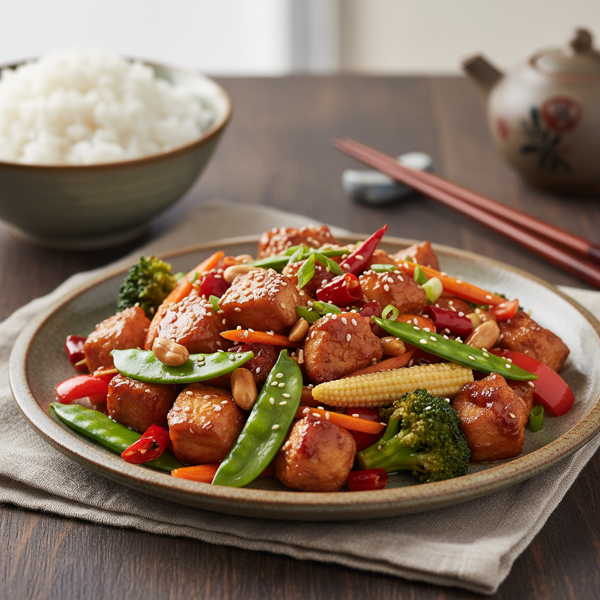
Enjoy a healthier twist on the classic Chinese dish with this Kung Pao Chicken recipe. A perfect blend of marinated chicken and a colorful mix of crisp vegetables, it's seasoned with a flavorful sauce that strikes a balance between heat and sweetness. This version is made with skinless chicken breast, fresh cabbage, celery, and crunchy peanuts, and is accompanied by fluffy white rice. Not only is it packed with protein, but it also boasts a variety of vitamins from the vegetables, making it a satisfying and nutritious meal option. Ideal for those managing their carbohydrate intake, this dish is both diabetic-friendly and full of authentic Asian flavors.
N/A
Servings
N/A
Calories
14
Ingredients
Ingredients
Light Soy Sauce
1 1/2 tablespoons (none)
Rice Vinegar
2 teaspoons (none)
Hot Pepper Sauce
6-10 drops (to taste)
Fresh Ginger
1 tablespoon (finely chopped (or 1 tsp. ground ginger))
Green Onion
1 (sliced)
Skinless Chicken Breast
3/4 lb (cut into bite-sized pieces)
Cabbage
1 cup (thinly sliced)
Celery
1 (sliced)
Dry-Roasted Salted Peanuts
2 ounces (about 1/4 cup) (none)
Canola Oil
1 tablespoon (none)
Reduced-Sodium Fat-Free Chicken Broth
2 tablespoons (none)
Sugar Substitute (Splenda)
1 tablespoon (none)
Rice Vinegar
1 teaspoon (none)
Uncooked White Rice
1 cup (cooked without fat or salt according to package directions)
Instructions
1
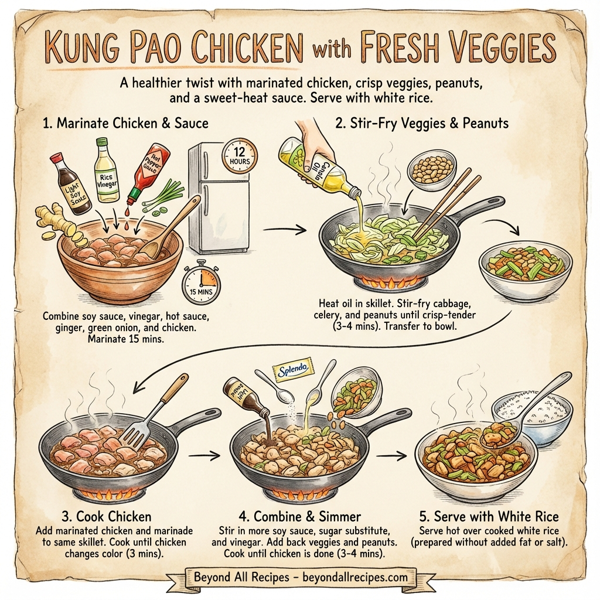
In a large, non-reactive bowl, combine 1 1/2 tablespoons of light soy sauce, 2 teaspoons of rice vinegar, 6-10 drops of hot pepper sauce (adjust to your taste), 1 tablespoon of finely chopped fresh ginger (or 1 teaspoon of ground ginger), and the sliced green onion. Add the bite-sized chicken pieces, ensuring they are evenly coated. Cover the bowl and let it marinate at room temperature for 15 minutes or refrigerate for up to 12 hours for deeper flavor.
2
Heat a large skillet over medium-high heat and add 1 tablespoon of canola oil. Once hot, add the sliced cabbage, celery, and 2 ounces (about 1/4 cup) of dry-roasted salted peanuts. Stir-fry until the vegetables are crisp-tender, about 3 to 4 minutes. Use a slotted spoon to transfer the cooked vegetables and peanuts to a bowl and set aside.
3
In the same skillet, add the marinated chicken along with the marinade. Cook over medium heat, stirring frequently until the chicken is no longer pink and has changed color, around 3 minutes.
4
Stir in an additional tablespoon of light soy sauce, 1 tablespoon of sugar substitute (like Splenda), and 1 teaspoon of rice vinegar. Add back the reserved vegetables and peanuts. Cook for an additional 3 to 4 minutes, stirring until the chicken is cooked through and the flavors meld.
5
Serve the Kung Pao Chicken hot over 1 cup of cooked white rice, prepared according to package directions without added fat or salt.
Nutrition Information
Frequently Asked Questions
Frequently Asked Questions
What is this Kung Pao Chicken recipe?
It is a healthier twist on the classic Chinese dish featuring marinated chicken, crisp vegetables, and a balanced sweet and spicy sauce served over white rice.
Is this recipe suitable for diabetics?
Yes, it is designed to be diabetic-friendly and ideal for those managing their carbohydrate intake.
What type of chicken should I use?
The recipe calls for 3/4 lb of skinless chicken breast cut into bite-sized pieces.
How long should the chicken marinate?
The chicken should marinate for at least 15 minutes at room temperature, or up to 12 hours in the refrigerator for deeper flavor.
What vegetables are included in this dish?
This recipe includes fresh cabbage and celery for a colorful and crisp texture.
What kind of peanuts are used?
The recipe specifies 2 ounces (about 1/4 cup) of dry-roasted salted peanuts.
Can I substitute fresh ginger?
Yes, you can use 1 teaspoon of ground ginger instead of 1 tablespoon of finely chopped fresh ginger.
What type of oil is used for stir-frying?
One tablespoon of canola oil is used to heat the skillet for stir-frying.
How do I adjust the spiciness of the dish?
You can adjust the heat by adding between 6 to 10 drops of hot pepper sauce according to your personal taste.
What sugar substitute is recommended?
The recipe suggests using 1 tablespoon of a sugar substitute like Splenda.
What kind of soy sauce is used?
Light soy sauce is used in both the marinade and the final sauce for flavor without excessive sodium.
How should the rice be prepared?
Prepare 1 cup of uncooked white rice according to package directions without adding any fat or salt.
What kind of vinegar is required?
The recipe uses rice vinegar in both the marinade and the cooking process.
Is there a specific bowl type recommended for marinating?
Yes, you should use a large, non-reactive bowl to marinate the chicken.
How long do the vegetables take to cook?
The cabbage, celery, and peanuts should be stir-fried for about 3 to 4 minutes until crisp-tender.
When do I add the chicken broth?
While listed in the ingredients, the chicken broth is typically integrated during the sauce-making phase to provide moisture and depth.
How long does the chicken take to cook?
The chicken takes about 3 minutes of frequent stirring to no longer be pink, plus an additional 3-4 minutes once the vegetables are added back.
Is this a low-carb meal?
Yes, it is considered a low-carb and protein-packed option, especially with the use of skinless breast and sugar substitutes.
Does this recipe contain green onions?
Yes, one sliced green onion is included in the marinade for added flavor.
Is this recipe considered Asian cuisine?
Yes, it features authentic Asian flavors through the use of soy sauce, ginger, and rice vinegar.
Can I use a different type of meat?
While this recipe is designed for chicken breast, other lean proteins could be used, though nutritional values will change.
What is the serving suggestion?
Serve the hot Kung Pao Chicken directly over a bed of fluffy, fat-free cooked white rice.
Does the recipe use salt?
No extra salt is added; the flavor comes from the light soy sauce and salted peanuts.
Is the chicken cooked separately from the vegetables?
The vegetables are stir-fried first and set aside, then the chicken is cooked, and finally, they are combined to finish.
How many tablespoons of soy sauce are used in total?
A total of 2 1/2 tablespoons of light soy sauce are used (1.5 for marinade, 1 for the final cook).
What is the texture of the final dish?
The dish features tender chicken pieces paired with crisp-tender vegetables and crunchy peanuts.
Is this a quick meal to prepare?
Yes, the stir-fry components cook in under 10 minutes total, making it a fast weeknight option.
Can I make this dish ahead of time?
The chicken can be marinated up to 12 hours in advance to save time and enhance flavor.
Does the recipe include fiber?
Yes, the fresh cabbage and celery provide vitamins and dietary fiber.
What makes the sauce sweet?
The sweetness comes from the addition of a sugar substitute like Splenda, which keeps the carb count lower.