Homemade Panko Bread Crumbs
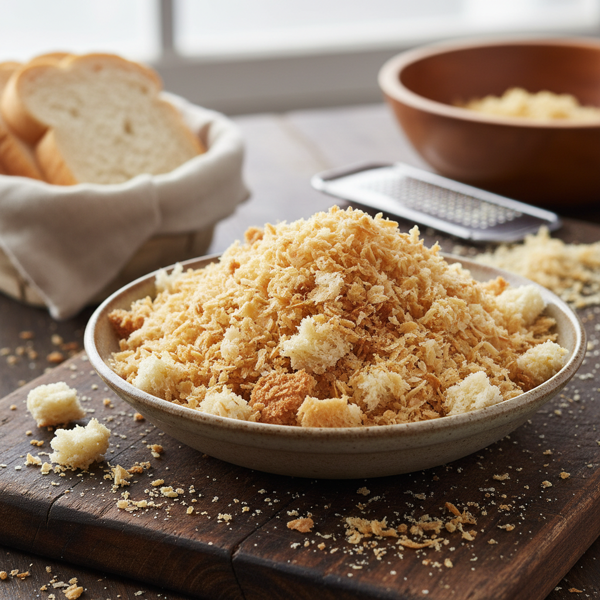
Elevate your culinary creations with homemade Panko, the airy and crispy Japanese bread crumbs that add the perfect texture to any dish. Made from fresh white bread, this simple recipe allows you to control the quality and flavor of your breadcrumbs without preservatives or additives. Whether you're breading protein, topping casseroles, or coating veggies for a satisfying crunch, making your own Panko is an easy and rewarding process that will enhance the authenticity of your Japanese recipes. Join me in discovering how effortless it is to whip up this essential ingredient right in your kitchen!
1
Servings
200
Calories
2
Ingredients
Ingredients
Fresh White Bread
2 slices (Trimmed and crusts removed)
Fresh White Bread
1 slice (Trimmed and crusts removed)
Instructions
1
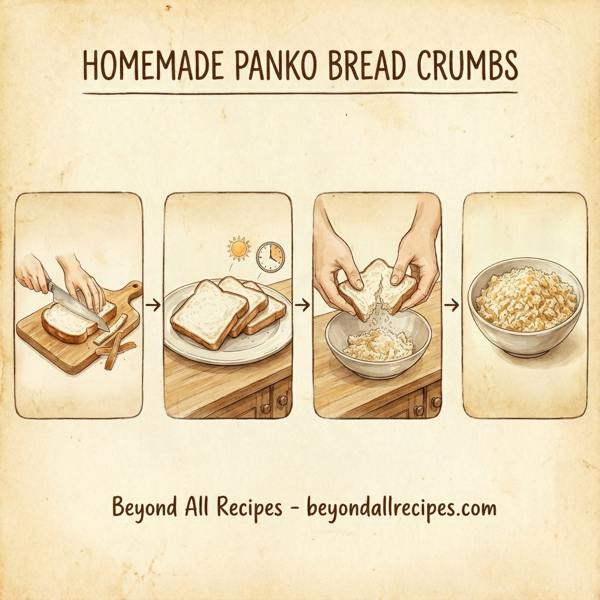
Begin by carefully trimming the brown crust from the slices of fresh white bread. Aim to remove just the outer edges, ensuring most of the soft bread remains intact.
2
Place the trimmed bread slices on a clean countertop or a plate, allowing them to sit for 1-2 hours at room temperature. For optimal results, you can leave them out to dry for up to 12 hours if needed, based on the bread's moisture content.
3
Once the bread is dried out but not hard, crumble the slices gently between your fingers until they form coarse and fluffy breadcrumbs. Avoid crushing them too fine, as Panko should retain some texture.
4
Your homemade Panko is now ready to use! Incorporate it into your favorite recipes or store it in an airtight container for later use.
Nutrition Information
2g
Fat
36g
Carbs
8g
Protein
2g
Fiber
Frequently Asked Questions
Frequently Asked Questions
What is Panko?
Panko is a type of Japanese breadcrumb known for its airy, crispy texture, which adds a unique crunch to various dishes.
How does Panko differ from regular breadcrumbs?
Panko is made from crustless white bread and has a larger, flake-like consistency that absorbs less oil than standard breadcrumbs.
What bread is best for making homemade Panko?
Fresh white bread is the ideal choice for creating authentic and light Panko bread crumbs.
Why do I need to remove the crusts from the bread?
Removing the brown crusts ensures that the Panko remains light in color and consistent in its signature flaky texture.
How long should I let the bread slices dry out?
The bread should dry for 1-2 hours at room temperature, though it can sit for up to 12 hours depending on the moisture content.
Can I use a food processor to make Panko crumbs?
While this recipe suggests crumbling by hand to maintain texture, a food processor can be used on a very brief pulse setting to avoid making the crumbs too fine.
How many calories are in this Panko recipe?
There are approximately 200 calories in the serving size defined by this recipe.
Is homemade Panko better than store-bought?
Homemade Panko is often preferred because it lacks the preservatives and additives found in many commercial brands.
How should I store my homemade Panko?
Store the finished Panko in an airtight container to maintain its crispness and prevent it from going stale.
Can I use whole wheat bread for this recipe?
While white bread is traditional for Panko, you can use whole wheat bread, though it will result in a denser texture and different flavor.
What are the common uses for Panko?
Panko is excellent for breading meats, topping baked casseroles, or coating vegetables for a satisfying crunch.
How much protein is in these bread crumbs?
This recipe contains 8 grams of protein per serving.
Does this recipe contain any sugar?
No sugar is added to this recipe, and the nutritional data indicates 0g of sugar.
How much fat is in this homemade Panko?
There are 2 grams of fat per serving in this recipe.
Can I toast the Panko crumbs?
Yes, you can lightly toast them in a pan or oven if you want a golden color before applying them to a dish.
How many slices of bread are used in this recipe?
This recipe utilizes a total of 3 slices of fresh white bread.
Is Panko essential for Japanese cooking?
Yes, it is an essential ingredient for achieving the authentic texture found in many Japanese fried dishes.
Can homemade Panko be frozen?
Yes, you can freeze Panko in an airtight freezer bag to keep it fresh for longer periods.
What is the carbohydrate count for this recipe?
There are 36 grams of carbohydrates per serving.
How do I achieve the flaky Panko texture by hand?
Gently crumble the dried bread slices between your fingers, being careful not to crush them into a fine powder.
Is there any sodium in this recipe?
The recipe doesn't add salt, but the bread used will contain its own natural sodium levels.
Is this Panko recipe vegan-friendly?
It is vegan-friendly as long as the white bread used does not contain animal products like milk, eggs, or honey.
What is the fiber content of this recipe?
This recipe provides 2 grams of fiber per serving.
Can I use stale bread instead of fresh white bread?
The recipe calls for fresh white bread that is air-dried specifically to create the correct flaky texture.
Is Panko naturally gluten-free?
No, traditional Panko is made from wheat-based bread. You would need to use gluten-free bread to make a gluten-free version.
What is the serving size for this specific recipe?
The recipe is calculated for one serving, based on the three slices of bread prepared.
Why is it important to let the bread dry at room temperature?
Drying the bread makes it easy to crumble into flakes without the bread becoming gummy or turning into a fine dust.
Can I add seasonings to my homemade Panko?
Yes, you can easily customize your Panko by adding dried herbs, garlic powder, or spices after the crumbling process.
Why does Panko result in a less greasy fried food?
The large, airy flakes of Panko have less surface area in contact with the oil compared to fine crumbs, leading to less oil absorption.
Is it difficult to make Panko at home?
No, it is a very simple and rewarding process that only requires bread and a little bit of time for drying.