Homemade Amish Sourdough Bread with Sweet Starter
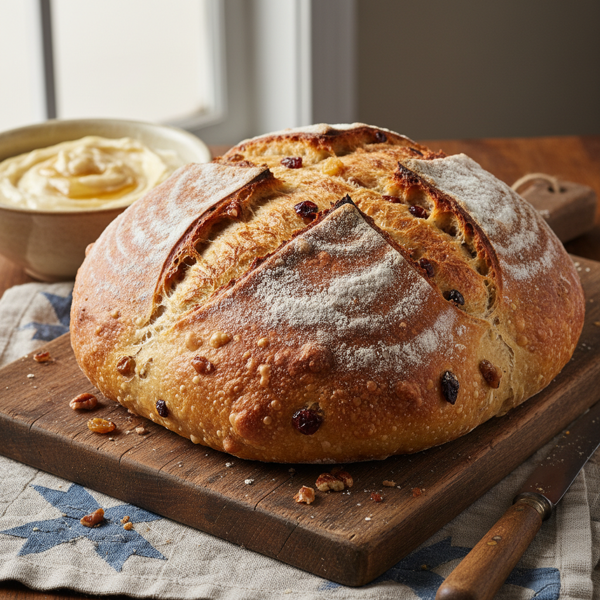
Discover the warm, rustic charm of Amish Sourdough Bread, a family recipe passed down through generations. This delightful bread begins with a fermenting starter that takes 10 days to develop its unique flavor profile. The starter is not only used for this bread but can also elevate your baking game for doughnuts, cinnamon rolls, and more! This recipe celebrates the beautiful process of bread-making, allowing you to gift portions of your starter to friends and family, sharing the joy of homemade goodness. Though the starter requires significant preparation, the wait is worth it for the deliciously fluffy loaves you'll create at any time after that. Whether you're a bread-making newbie or a seasoned pro, this recipe will guide you to baking perfection!
30
Servings
50
Calories
9
Ingredients

Ingredients
dry yeast
2 1/4 teaspoons (Dissolve in warm water for starter and add to dough)
warm water
1/4 cup for starter, 1 cup for dough (Use warm water to activate yeast)
flour
3 cups for starter, 1 cup whole wheat flour, 6-7 cups all-purpose flour (Use for starter and dough, adjust for consistency)
sugar or honey
3 cups for starter, 2 tablespoons for dough (Sweetener to feed yeast; can use a combination)
milk
3 cups for starter, 1 cup for dough (Use low-fat or 2% milk for starter and dough)
vegetable oil
1/4 cup (Oil for dough)
eggs
2 (Add to dough)
salt
2 teaspoons (Add to dough)
egg white
1 (For brushing tops of rolls and loaf)
Instructions
1
Start by making the sourdough starter. In a plastic or glass container, dissolve 2 1/4 teaspoons of dry yeast in 1/4 cup of warm water. Stir in 1 cup of flour, 1 cup of sugar (or honey), and 1 cup of milk (low-fat or 2% is fine).
2
Cover the container with a clean cloth and leave it at room temperature. Stir the mixture daily to ensure proper fermentation.
3
On Day 5, 'feed' the starter by adding another 1 cup of flour, 1 cup of sugar (or honey), and 1 cup of milk. Continue to stir daily.
4
On Day 10, feed the starter once more with 1 cup of flour, 1 cup of sugar (or honey), and 1 cup of milk. At this point, your starter is ready to be divided, given away, or frozen for later use. Wait for a day after feeding before baking for best results.
5
If you're not baking right away, refrigerate the starter but remember to bring it back to room temperature before using it.
6
To bake the bread, place 1 cup of prepared starter into the bowl of a mixer. Using a dough hook on a slow setting, add 2 1/4 teaspoons dry yeast, 1 cup warm water, 1 cup milk, 2 tablespoons honey, 1/4 cup vegetable oil, 1 cup whole wheat flour, 2 eggs, 2 teaspoons salt, and approximately 6-7 cups of all-purpose flour. Adjust the flour for your preferred consistency, adding more whole wheat if desired.
7
Knead the dough for 10 minutes in the mixer until it is slightly sticky but smooth and elastic, leaving most of the dough on the hook.
8
Transfer the dough to a floured surface and knead by hand for another 2 minutes, shaping it into a large ball.
9
Lightly oil the interior of the mixer bowl, return the dough ball to the bowl, and turn to coat. Cover with a clean towel and let it rise in a warm place until it doubles in size.
10
Once risen, punch down the dough and divide it into two sections. Shape half into rolls by cutting it into 12-14 equal pieces and flattening each into a disc. Brush each roll with the beaten egg white and sprinkle with sesame or poppy seeds, if desired. Place them on a greased baking sheet.
11
Cover the rolls with a towel and let them rise for about 1 hour, or until they double in size.
12
While the rolls are rising, preheat your oven to 375°F (190°C). Bake the rolls for 15-20 minutes until they are golden brown.
13
For the loaf, flatten half of the dough into a rectangle, remove air bubbles, and roll it tightly into a log. Place the log seam-side down in a greased loaf pan.
14
Brush the top with egg white and sprinkle with seeds before placing it in the oven. Bake for 25 minutes. The bread is ready when it sounds hollow when thumped on the bottom.
15
You can set aside the remaining dough to shape into a loaf, wrap in plastic, and freeze for future use. To bake later, thaw and rise as described above, then bake as usual.
Nutrition Information
1g
Fat
9.5g
Carbs
1.3g
Protein
Frequently Asked Questions
Frequently Asked Questions
What is Homemade Amish Sourdough Bread?
It is a rustic, family-style bread made from a sweet, fermented starter that develops over 10 days.
How long does the sourdough starter take to prepare?
The starter requires a 10-day fermentation process before it is ready for its first use.
Can I use honey instead of sugar for the starter?
Yes, honey can be used as a direct substitute for sugar in the starter mixture.
What kind of milk is recommended for the starter?
Low-fat or 2% milk works perfectly for making the starter.
How often should I stir the starter?
The starter should be stirred daily to ensure proper fermentation.
On which days do I feed the Amish sourdough starter?
You should feed the starter on Day 5 and Day 10 of the process.
What do I add to the starter during a feeding?
Add 1 cup of flour, 1 cup of sugar (or honey), and 1 cup of milk.
What can I do with the starter after 10 days?
You can use it to bake, divide it to give away to friends, or freeze it for later use.
How should I store the starter if I am not baking?
Refrigerate the starter if not in use, but bring it to room temperature before baking.
How much starter is needed for one batch of bread?
You need 1 cup of the prepared sourdough starter for the bread dough.
What type of flour is used in the bread dough?
The recipe uses a combination of whole wheat flour and all-purpose flour.
How long should the dough be kneaded in a mixer?
Knead the dough for 10 minutes in the mixer using a dough hook on a slow setting.
Is hand kneading required for this recipe?
Yes, after the mixer, you should knead the dough by hand for an additional 2 minutes.
What is the correct consistency for the dough?
The dough should be slightly sticky but smooth and elastic.
How long should the dough rise initially?
Let the dough rise in a warm place until it doubles in size.
Can I make rolls instead of a loaf?
Yes, you can divide the dough into 12-14 pieces to create rolls.
What should I brush on top of the dough before baking?
Brush the top of the rolls or loaf with beaten egg white.
What toppings can be added to the bread?
You can sprinkle the top with sesame seeds or poppy seeds if desired.
At what temperature should the bread be baked?
Preheat your oven and bake the bread at 375°F (190°C).
How long do the rolls take to bake?
The rolls should bake for 15-20 minutes until golden brown.
How long does the loaf take to bake?
A standard loaf takes approximately 25 minutes to bake.
How can I tell if the bread is finished baking?
The bread is ready when it sounds hollow when thumped on the bottom.
Can the dough be frozen?
Yes, you can wrap the shaped dough in plastic and freeze it for future use.
How do I bake frozen dough?
Thaw the dough, let it rise until doubled, and then bake as usual.
What other items can be made with this starter?
The starter is versatile and can be used for doughnuts and cinnamon rolls.
Is this recipe suitable for beginner bakers?
Yes, the guide is designed for both newbies and seasoned pros.
How many servings does one recipe make?
This recipe yields approximately 30 servings.
What is the calorie count for a serving?
There are approximately 50 calories per serving.
What is the fat content per serving?
Each serving contains approximately 1 gram of fat.
Is this bread recipe low in cholesterol?
Yes, the recipe is tagged as a low cholesterol food option.