Citrus-Glazed Gluten-Free Paska
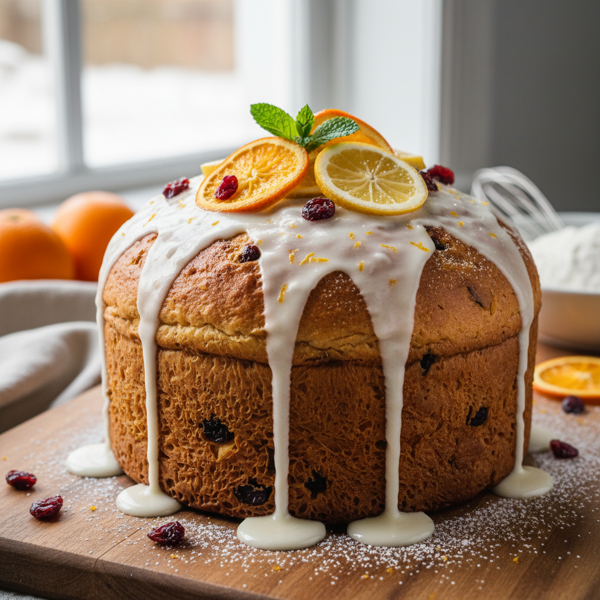
Celebrate Easter with this delightful gluten-free Paska, a traditional Mennonite bread known for its slightly sweet, citrusy flavor and rich egg base. Ideal for both festive gatherings and everyday enjoyment, this bread can be baked into an elegant loaf topped with a creamy frosting and colorful sprinkles or shaped into delightful buns or braided forms. With its distinct tang from fresh lemon and orange juice, and the unique texture provided by a blend of gluten-free flours, this Paska is not only a treat for the taste buds but also a feast for the eyes. Ideal for those avoiding gluten, this recipe produces a dough that is smooth, easy to shape, and holds its form beautifully. Don't forget to adjust the baking time if you choose to make buns instead of a loaf!
12
Servings
240
Calories
28
Ingredients
Ingredients
whole milk
3/4 cup (cold)
gluten-free bread flour blend
1/4 cup
whole milk
3/4 cup (approximately 110°F)
granulated sugar
3 1/2 teaspoons
active dry yeast
2 tablespoons
ascorbic acid
1/8 teaspoon (optional)
amylase enzyme
1/16 teaspoon (optional)
lemon
1/2 medium (juice and zest)
orange
1/2 medium (juice and zest)
gluten-free bread flour blend
3 cups
granulated sugar
1/3 cup
potato flour
2 tablespoons (or instant potato flakes)
psyllium husk powder
1 tablespoon
salt
1 1/2 teaspoons
eggs
2
roux (tangzhong)
1
butter
4 tablespoons (softened)
gluten-free bread
cornstarch
228 g
tapioca starch
60 g
rice flour
200 g (superfine)
whey protein isolate
60 g
xanthan gum
12 g
cream cheese
2 ounces (room temperature)
butter
2 tablespoons (room temperature)
powdered sugar
1/2 cup
milk or heavy cream
2 teaspoons (until spreadable consistency is reached)
candy sprinkles
1/4 cup (or more or less)
Instructions
1
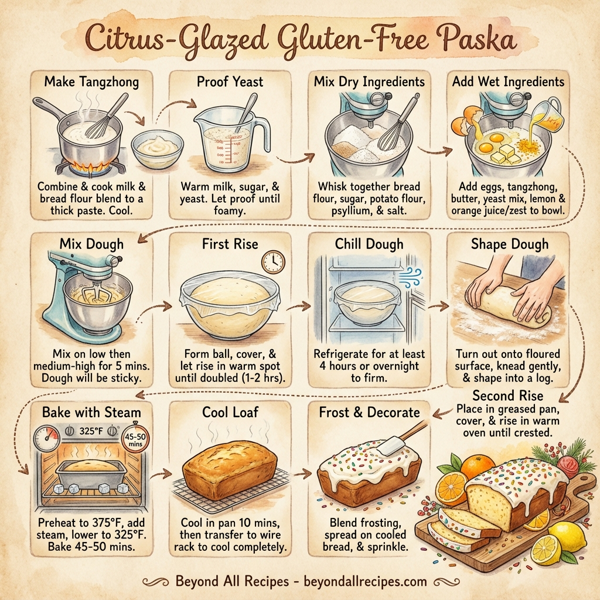
In a saucepan, combine 3/4 cup cold whole milk and 1/4 cup gluten-free bread flour blend. Heat on medium, whisking continuously until the mixture thickens, about 5 minutes. Set aside to cool slightly.
2
Warm 3/4 cup of whole milk until it reaches about 110°F using your microwave. Stir in 3 1/2 teaspoons of granulated sugar until dissolved and sprinkle 2 tablespoons of active dry yeast on top. Set aside for the yeast to proof and become foamy.
3
In the bowl of a stand mixer, whisk together 3 cups of gluten-free bread flour blend, 1/3 cup granulated sugar, 2 tablespoons of potato flour, 1 tablespoon psyllium husk powder, and 1 1/2 teaspoons of salt.
4
Add the eggs, tangzhong (roux), and softened butter to the dry ingredient mixture in the stand mixer. In the yeast mixture, stir in the optional ascorbic acid and amylase enzyme (if using), then mix in the juice and zest of the lemon and orange. Pour this mixture into the stand mixer bowl.
5
Using the paddle attachment, begin mixing on low speed to combine the ingredients until incorporated; then increase the speed to medium-high for about 5 minutes. The dough will be quite sticky, resembling a thick batter rather than a traditional dough.
6
Use a rubber spatula to scrape down the sides and form a ball of dough in the center of the bowl. Cover with plastic wrap and let the dough rise in a warm location until doubled in size, which may take 1-2 hours depending on the environment.
7
After the dough has risen, refrigerate it for at least 4 hours or overnight. This chilling helps to firm the dough. If you're short on time, you can chill the dough in the freezer for 20-30 minutes instead.
8
Preheat your oven to the lowest setting (around 170°F), then turn off the heat. Grease an 8.5 x 4.5-inch bread pan with butter or oil. On a lightly floured countertop, turn the chilled dough out and sprinkle more gluten-free flour on top. Knead gently to incorporate the flour until the dough is smooth and less sticky.
9
Shape the dough by flattening it into a rectangle that fits the length of your bread pan. Roll the dough up into a log, sealing the edges as you go, and place the seam side down in the greased bread pan. Cover and allow the dough to rise in the warm oven until it crests about 1-2 inches above the top of the pan.
10
Once risen, preheat the oven to 375°F. Add several ice cubes to the bottom of the oven for steam, then quickly place the bread pan on the middle rack and lower the temperature to 325°F. Bake for 45-50 minutes, covering with foil if necessary to prevent over-browning.
11
Remove the loaf from the oven when done, let it cool in the pan for 10 minutes, then transfer it to a wire rack to cool completely.
12
To prepare the frosting, blend the cream cheese and room temperature butter until smooth. Gradually add powdered sugar, then mix in enough milk or cream to reach your desired consistency.
13
Once the bread is completely cooled, spread the frosting on top and generously sprinkle with candy sprinkles before serving.
Nutrition Information
8g
Fat
38g
Carbs
4g
Protein
Frequently Asked Questions
Frequently Asked Questions
What is Citrus-Glazed Gluten-Free Paska?
It is a traditional Mennonite sweet bread known for its rich egg base and citrusy flavor, adapted here to be entirely gluten-free.
How many servings does this recipe yield?
This recipe makes 12 servings.
What are the nutritional facts per serving?
Each serving contains approximately 240 calories, 8g of fat, 38g of carbohydrates, and 4g of protein.
What is a tangzhong and how is it used here?
A tangzhong is a roux made by heating 3/4 cup milk and 1/4 cup gluten-free flour until thickened; it helps improve the texture and shelf life of the bread.
What gives this Paska its citrus flavor?
The distinct tang comes from the addition of fresh juice and zest from both a lemon and an orange.
What type of yeast is required for this recipe?
This recipe uses 2 tablespoons of active dry yeast.
What temperature should the milk be for proofing the yeast?
The milk should be warmed to approximately 110°F to properly activate the yeast.
Can I shape this dough into something other than a loaf?
Yes, the dough is versatile and can be shaped into delightful buns or braided forms.
How long should the dough rise initially?
The first rise typically takes 1 to 2 hours in a warm location until the dough has doubled in size.
Why is the dough refrigerated after the first rise?
Chilling the dough for at least 4 hours or overnight helps firm it up, making it easier to handle and shape.
Is there a faster way to chill the dough?
If you are short on time, you can chill the dough in the freezer for 20 to 30 minutes.
What size bread pan is needed?
An 8.5 x 4.5-inch bread pan is recommended.
What is the purpose of adding ice cubes to the oven?
Adding ice cubes to the bottom of the oven creates steam, which helps with the bread's rise and crust development.
What are the baking temperatures for this Paska?
Preheat the oven to 375°F, then immediately lower the temperature to 325°F once the bread is placed inside.
How long does the bread take to bake?
The loaf should bake for 45 to 50 minutes.
What ingredients make up the gluten-free flour blend?
The blend includes cornstarch, tapioca starch, rice flour, whey protein isolate, and xanthan gum.
Why is psyllium husk powder used in the recipe?
Psyllium husk powder acts as a binder and provides the necessary structure that is often missing in gluten-free baking.
What are the optional ingredients for the dough?
Ascorbic acid and amylase enzyme are optional additions that can improve the dough's performance.
How do I know when the second rise is complete?
The dough is ready when it has risen to about 1 to 2 inches above the top of the bread pan.
What is the texture of the dough during mixing?
The dough will be quite sticky and will resemble a thick batter rather than a traditional wheat dough.
How do I make the frosting?
Blend cream cheese and butter until smooth, then gradually add powdered sugar and a small amount of milk or cream.
When should the frosting be applied?
The frosting should only be spread on the Paska once the bread has cooled completely.
What should I use to decorate the Paska?
The recipe calls for a generous amount of candy sprinkles to be added on top of the frosting.
Which mixer attachment is best for this recipe?
The paddle attachment of a stand mixer is recommended for incorporating the ingredients.
How should I prevent the bread from over-browning?
If the bread is browning too quickly, you can cover it loosely with aluminum foil during the later stages of baking.
Is potato flour mandatory?
The recipe calls for 2 tablespoons of potato flour, though instant potato flakes can be used as a substitute.
What is the purpose of kneading the chilled dough?
Gently kneading the chilled dough with a little extra flour helps make it smooth and less sticky for final shaping.
Can I use heavy cream instead of milk for the frosting?
Yes, you can use either milk or heavy cream to achieve your desired frosting consistency.
How long should the bread cool in the pan?
Let the loaf cool in the pan for 10 minutes before transferring it to a wire rack.
Is this recipe suitable for those with celiac disease?
Yes, this recipe is specifically designed to be gluten-free, using a blend of non-gluten flours and starches.