Artisan Gluten-Free French Bread
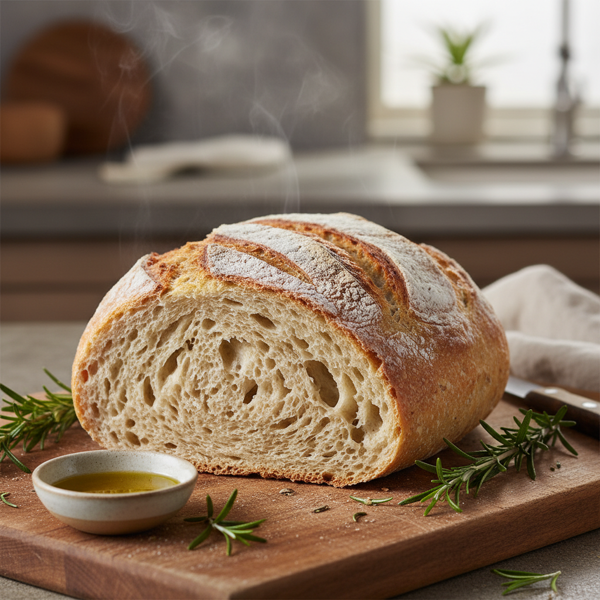
Indulge in the delightful taste of this Artisan Gluten-Free French Bread, a wonderful alternative that captures the essence of traditional French bread without the gluten. With a beautifully crusty exterior and a soft, tender interior, this bread is perfect for any occasion. Whether enjoyed fresh out of the oven, toasted, or transformed into delicious bruschetta using 'Joanne's Creamy Brushetta' recipe (#108383), this versatile loaf is a must-have in your kitchen. Plus, it freezes beautifully, ensuring you can savor its deliciousness anytime. Make this delectable bread in just an hour and elevate your meals with its exquisite flavor and texture!
N/A
Servings
N/A
Calories
12
Ingredients
Ingredients
Rice Flour (White)
2 cups (none)
Tapioca Flour
1 cup (none)
Xanthan Gum
3 teaspoons (none)
Salt
1 1/2 teaspoons (none)
Egg Substitute
2 teaspoons (optional)
Sugar
2 tablespoons (none)
Lukewarm Water
1 1/2 cups (none)
Fast Rise Yeast
2 tablespoons (none)
Butter or Margarine (Melted)
2 tablespoons (melted)
Egg Whites
3 (beaten slightly)
Vinegar
1 teaspoon (none)
Melted Butter
to taste (for brushing)
Instructions
1
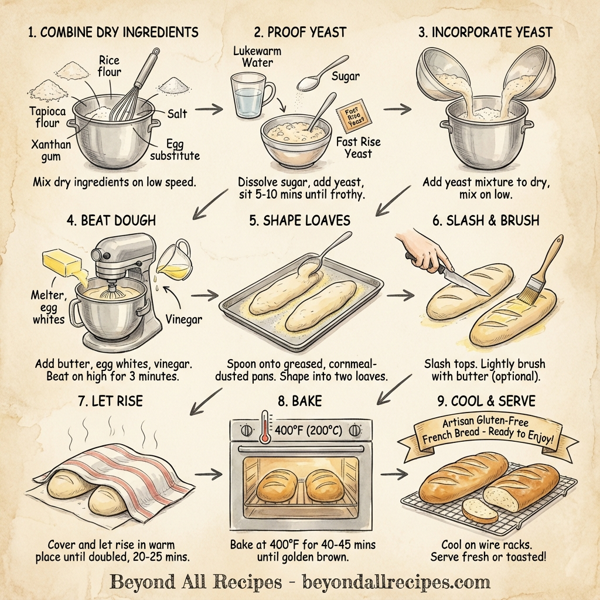
In the bowl of a heavy-duty mixer, combine the rice flour, tapioca flour, xanthan gum, salt, and egg substitute (if using). Mix on low speed until well combined.
2
In a separate small bowl, dissolve the sugar in the lukewarm water and then add the fast rise yeast. Allow the mixture to sit for 5-10 minutes until it becomes frothy.
3
Add the frothy yeast mixture to the dry ingredients in the mixer bowl. Mix on low speed until incorporated.
4
Next, add the melted butter, beaten egg whites, and vinegar to the mixture. Increase the mixer speed to high and beat for 3 minutes until the dough is smooth and well blended.
5
Prepare your baking sheets by greasing them and dusting with cornmeal. Spoon the dough onto the sheets, shaping it into two long French loaf shapes or spoon it into French-bread pans.
6
Using a sharp knife, make diagonal slashes on the tops of the loaves every few inches. If desired, lightly brush the tops with melted butter for added flavor.
7
Cover the dough with a clean kitchen towel and let it rise in a warm place until it has doubled in bulk, approximately 20 to 25 minutes.
8
Preheat your oven to 400°F (200°C). Once the dough has risen, bake for 40 to 45 minutes until the loaves are golden brown and sound hollow when tapped on the bottom.
9
Remove the bread from the pans and let cool on wire racks before slicing.
Nutrition Information
Frequently Asked Questions
Frequently Asked Questions
What is Artisan Gluten-Free French Bread?
It is a gluten-free alternative to traditional French bread that features a crusty exterior and a soft, tender interior.
How long does it take to make this bread?
The entire process takes approximately one hour from start to finish.
What types of flour are used in this recipe?
This recipe uses 2 cups of white rice flour and 1 cup of tapioca flour.
Why is xanthan gum necessary in this bread?
Xanthan gum acts as a binding agent and provides the structure that gluten would normally provide in traditional bread.
Is the egg substitute required?
The 2 teaspoons of egg substitute are listed as an optional ingredient in the dry mix.
How do I activate the yeast?
Dissolve sugar in lukewarm water, add the fast rise yeast, and let it sit for 5-10 minutes until it becomes frothy.
What type of yeast is recommended?
The recipe calls for 2 tablespoons of fast rise yeast.
What should the water temperature be?
The water should be lukewarm to properly activate the yeast without killing it.
How long should I beat the dough?
After adding the wet ingredients, increase the mixer speed to high and beat for 3 minutes until smooth.
How do I prepare the baking sheets?
Grease the baking sheets and dust them with cornmeal before spooning on the dough.
How many loaves does this recipe produce?
This recipe is designed to make two long French loaf shapes.
Should I score the bread before baking?
Yes, use a sharp knife to make diagonal slashes on the tops of the loaves every few inches.
Can I brush the top with butter?
Yes, you can lightly brush the tops with melted butter before rising to add flavor.
How long does the dough need to rise?
The dough should rise in a warm place for about 20 to 25 minutes until it has doubled in bulk.
What is the oven temperature for baking?
The bread should be baked in a preheated oven at 400°F (200°C).
How long does the baking process take?
Bake the loaves for 40 to 45 minutes.
How can I tell if the bread is finished baking?
The bread is done when it is golden brown and sounds hollow when tapped on the bottom.
Can I freeze this gluten-free bread?
Yes, this bread freezes beautifully, making it easy to store for later use.
What can I serve with this bread?
It is excellent fresh, toasted, or used for bruschetta recipes.
Is there a specific bruschetta recipe recommended for this bread?
The description suggests using Joanne's Creamy Brushetta recipe (#108383).
What is the purpose of vinegar in the dough?
Vinegar helps with the leavening process and improves the overall texture of gluten-free bread.
How should I prepare the egg whites?
The 3 egg whites should be beaten slightly before being added to the dough.
Can I use margarine instead of butter?
Yes, you can use either 2 tablespoons of melted butter or melted margarine.
Do I need a special pan for this bread?
You can use standard baking sheets or specialized French-bread pans.
Should the bread be sliced immediately?
It is best to let the bread cool on wire racks before slicing to ensure the interior sets properly.
Is sugar necessary in this recipe?
Yes, 2 tablespoons of sugar are used to feed the yeast and help it rise.
What equipment is best for mixing the dough?
A heavy-duty mixer is recommended to handle the consistency of the gluten-free dough.
What is the texture of the finished loaf?
The bread has a crusty exterior and a soft, tender interior.
Does this recipe contain dairy?
Yes, it contains butter and eggs, though margarine can be used as a substitute for butter.
How much salt is included?
The recipe calls for 1 1/2 teaspoons of salt.